At the end of 1993 a young physicist is getting ready to sail around the world: "I had already found the sponsors. I was looking for the boat." Then Carlo Rubbia, the Nobel laureate, offers him a place in his group, and he gives up the voyage. Almost thirty years later he does get on a sailing boat: in the middle of the Pacific he writes an email to his contacts, and within a few days his newly founded start-up raises 100 million euros from private investors. That start-up is Newcleo. It wants to build small lead-cooled nuclear reactors, and on 22 September 2026 it reached Nasdaq through a merger that valued it at around 2.4 billion dollars. The next day, the Italian Senate passed the law that reopens the road to nuclear power in Italy, closed by a referendum in 1987. What persuades hundreds of investors to put hundreds of millions of dollars into reactors that do not yet exist?
The boy who sold second-hand books
Stefano Buono was born in Avellino in 1966, the year in which Italy was the world's third-largest producer of nuclear power, after the United States and the United Kingdom: the plants at Latina, Garigliano and Trino had come online between 1963 and 1965.
When he is in the second year of primary school, the family moves to Turin. As he recalled on the Made IT podcast, his parents were office workers who had left school at fourteen, and they had moved partly so that their children could get a better education. In secondary school he works with his brother, an advertising photographer, and with that money he pays for his first trips on his own.
At university, studying physics in Turin, he invents a small trade in second-hand books: he buys them and sells them on, and by his own account the business doubles every year until it reaches 3,000 volumes. It costs him two years' delay in graduating.
The country that switches off its plants
While Buono is studying, Italy changes its mind about nuclear power. On 26 April 1986 reactor 4 at Chernobyl, in what was then the Soviet Union, explodes. A year and a half later, on 8 and 9 November 1987, Italians vote in three referendums on nuclear power, and on the main questions around 80% of voters choose to stop. Technically the questions do not ban power plants, but within a few years the ones still running are shut down, from Caorso to Trino, and the building site at Montalto di Castro, in Lazio, is halted halfway through. In 2011 a second referendum rejects an attempted return with more than 94% of the vote.
Buono graduates in 1991, with a thesis written at CERN in Geneva, the European particle physics laboratory. And it is there that nuclear power, the very thing Italy has just abandoned, comes looking for him.
The boat that stays in port
In 1993 Rubbia, Nobel laureate in 1984 and until that year director-general of CERN, presents an idea designed to answer the fears raised by Chernobyl: the energy amplifier. An ordinary reactor runs on a chain reaction that sustains itself and has to be kept under control. In Rubbia's design the core alone is not enough to keep the reaction going: the missing neutrons are supplied by a particle accelerator. Switch off the accelerator and everything stops. Thorium as fuel, molten lead as coolant, and among the goals the transformation of long-lived waste into less dangerous materials.
At the end of 1993 Buono is still at CERN on a research fellowship, and Rubbia invites him into the group working on the amplifier. He abandons the round-the-world voyage and stays with Rubbia until 2002. In 1995 he follows the project from the CRS4 research centre in Cagliari and lives on a boat moored in the harbour. He has described those years as a period that was "almost monastic, but extremely formative", and of Rubbia he says: "Above all, he taught me to be ambitious."
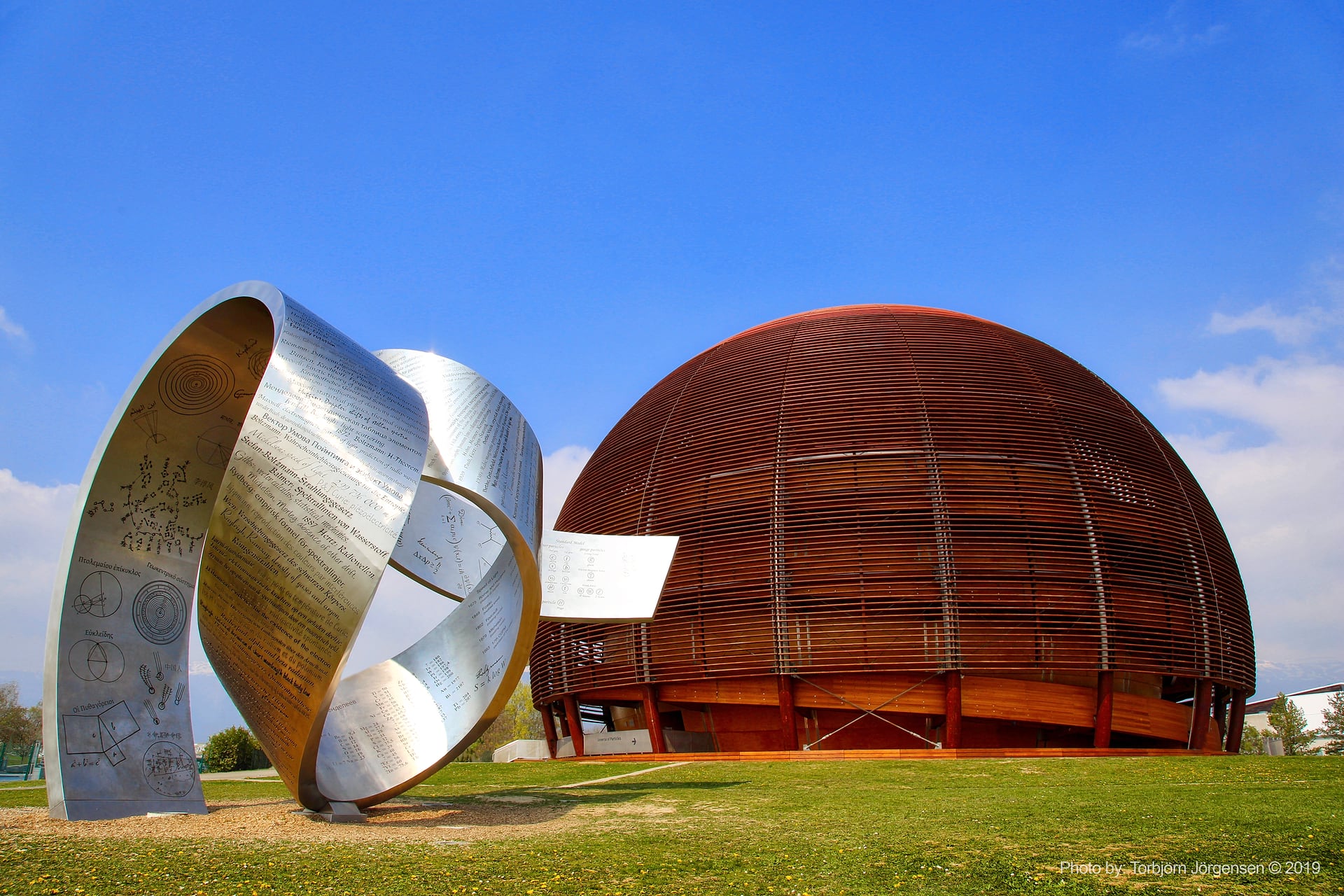 CERN's Globe of Science and Innovation in Geneva. This is where Buono wrote his degree thesis and worked with Carlo Rubbia from 1993 to 2002.
The energy amplifier never left the drawing board: no plant of that kind has ever entered commercial service. But that work also produced a patent, and that is where Buono's first business venture begins.
Five times the price in two years
In 2002 Buono founds Advanced Accelerator Applications (AAA) to exploit a CERN patent, with its headquarters in Saint-Genis-Pouilly, the French town right next to the laboratory. AAA makes radiopharmaceuticals: medicines that contain a radioactive atom and that, once they reach tumour cells, are used either to see them in diagnostic scans or to strike them from within.
For years it is mainly a diagnostics company. Then comes the therapy that changes everything, Lutathera, used against certain neuroendocrine tumours, the ones that arise from hormone-producing cells. On 10 November 2015 AAA lists on Nasdaq: 16 dollars a share, 75 million raised. In 2017 Lutathera wins European approval, and on 30 October Novartis offers 82 dollars a share, more than five times the price of two years earlier, for a total of around 3.9 billion dollars. The deal closes on 22 January 2018. Four days later comes approval from the FDA, the US drug regulator.
In Italian venture capital, Milano Finanza reports, there is a saying: "There is a market that goes up or goes down, and then there is Stefano Buono." In 2018 he founds his family office, Elysia Capital, and spends three years preparing his next move.
An email from the Pacific
In the end, he does take the sailing boat. And it is from the middle of the Pacific that he writes to the entrepreneurs he knows, asking them to invest in the new project: according to Milano Finanza, within a few days he raises 100 million euros. It is the first funding round: money paid in by investors in exchange for shares in the company.
Newcleo is unveiled on 31 August 2021 together with that round, announced at 118 million dollars: headquarters in London, research in Turin, and among the first shareholders Exor Seeds, the start-up arm of the Agnelli-Elkann holding company, the holding company LIFTT and the Club degli Investitori of Turin. Alongside Buono are Luciano Cinotti, chief scientific officer, and Elisabeth Rizzotti, chief operating officer. On the same day Newcleo buys Hydromine Nuclear Energy, which had already developed designs for lead-cooled reactors.
Newcleo's reactor is not Rubbia's machine: it has no accelerator. It is a fast reactor, meaning it uses high-energy neutrons, cooled by molten lead, which, unlike the water in conventional plants, operates at close to atmospheric pressure. The fuel is MOX, a mixture of uranium and plutonium oxides recovered from fuel already used in power plants: this is what Newcleo means when it talks about using waste as fuel. Thirty years on, the two core ideas are still those of Rubbia's group: lead and waste.
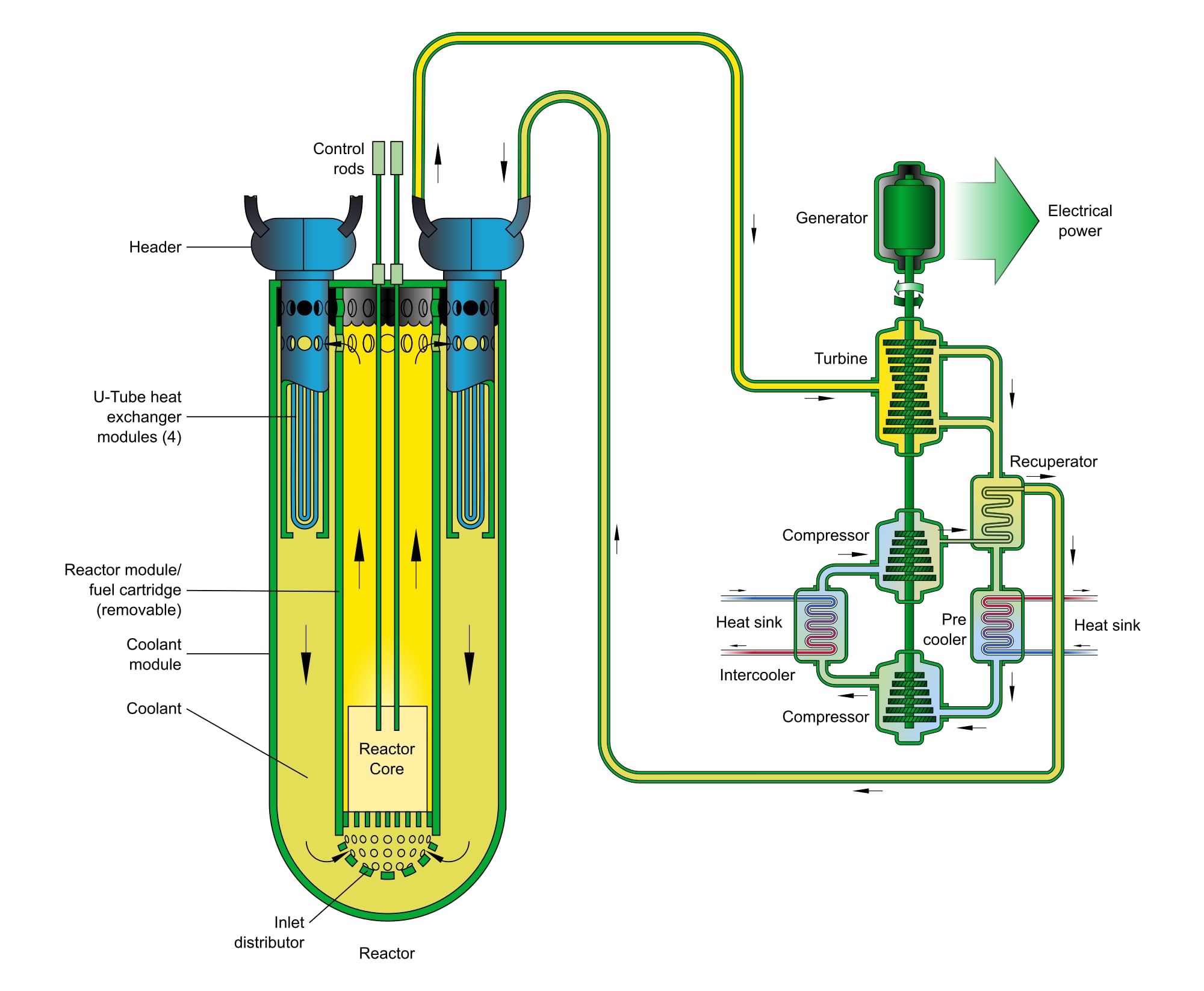 How a lead-cooled fast reactor works: molten lead flows around the core and carries heat to the exchangers, which feed the circuit that drives the turbine and the generator. This is the general layout of this family of reactors, not Newcleo's design.
From 100 million to half a billion
At first Newcleo moves fast. In June 2022 it raises another 300 million euros: 400 million in less than a year. In March 2023 it launches a capital increase of up to 1 billion euros with a precise plan: a first 30-megawatt-electric demonstration reactor in France by 2030, a date later pushed back to the early 2030s, and a 200-megawatt commercial model in the United Kingdom by 2032, later moved to the United States. It has around 200 employees.
Then the pace slows. Of that billion, by September 2024 only 135 million has come in. Total funds raised reach around 535 million, the shareholders number more than 700, 90% of them Italian: families such as the Petrones and the Malacalzas, asset managers such as Azimut and Kairos. Meanwhile Newcleo moves its headquarters from London to Paris, buys companies in its supply chain, such as the Swiss pump maker Rütschi and SRS-Fucina, which specialises in liquid-lead systems, and by the end of 2024 has more than 850 employees, around 400 of them in Italy. Its 2024 revenue, about 70 million euros, comes from these companies. The reactors bill nothing.
And the cash is falling: 282 million euros at the end of 2023, 190 at the end of 2024, 160 in April 2025, with a burn rate of about 13 million a month. The 2024 loss is 110 million, double the previous year's. In August 2025 Il Sole 24 Ore reveals that PwC, the auditor, has flagged a real risk to the company's status as a going concern: new capital is needed within twelve months and there are no signed commitments. Newcleo halts its activities in the United Kingdom, the country where it wanted to build its first commercial reactor. The listing, according to the same article, was planned for 2027.
The road to Nasdaq
The turning point comes from America. In October 2025 Newcleo teams up with the US nuclear start-up Oklo and announces that it plans to invest up to 2 billion dollars in fuel facilities in the United States. Money it does not have. To find it, it needs the stock market, and Buono chooses the American one: as he explained to Milano Finanza, to raise capital and make the company known to that market.
Newcleo, however, does not go for a conventional listing: it goes through a SPAC. This is how it works: a company with no business lists on the stock exchange, raises money from investors and keeps it aside until it finds a private company to merge with. With the merger, the private company finds itself listed in the SPAC's place. It is a faster route, but it has a flaw: those who put money into the SPAC can ask for it back until a few days before the merger, so the company only finds out at the very end how much money it will actually receive.
At the end of May 2026 Newcleo announces its merger with the US SPAC NewHold, which values it at around 2.4 billion dollars before the new capital, with up to 429 million on the table. In September, at closing, 247 million comes in: almost all of it from a group of large investors who had already committed to buying shares at 10 dollars, while most of those who were in the SPAC take their money back. Adding these 247 million to the private rounds, Newcleo has raised more than a billion dollars since 2021.
Part of that money will go towards growing in the United States. Newcleo is assessing the Savannah River site, in South Carolina, for its first American reactor, to be switched on by the end of 2032, and for a MOX fuel factory. It was right there, in the 2000s, that the United States had started building a MOX plant, cancelled in 2018 without ever having entered service.
On 22 September Newcleo debuts on Nasdaq under the ticker NWCL, at an unfavourable moment: as Buono pointed out, nuclear stocks have lost around 40% since the deal was signed. The next day, 23 September, the Italian Senate gives final approval to the enabling law on nuclear power: it does not authorise new plants, but it instructs the government to write the rules for building them again. Thirty-nine years after the referendum.
The stock
Newcleo is listed on Nasdaq under the ticker NWCL. On its first day, 22 September 2026, it closed at 8.15 dollars: 18.5% below the 10 dollars paid by the large investors who came in before the listing. At that price Newcleo was worth between 2.3 and 2.5 billion dollars on the market, depending on how many shares are counted.
From here on, three things matter. The non-nuclear prototype at Brasimone, in the Apennines near Bologna, where molten lead is heated electrically to test components, which is due to be completed by the end of 2026. The permits for the first American reactor. And money: with losses of more than 100 million a year, further capital increases will be needed before the reactors generate revenue, and each one shrinks the slice held by existing shareholders. And in March 2027 the early shareholders, who cannot sell for now, will be free to do so.
Buono has already made the journey from the laboratory to Nasdaq once, and that time he quintupled the price in two years. But then the product existed and was one step away from approval. This time it is a reactor that, on current plans, will be switched on six years from now. The question is whether Newcleo is the revenge of an idea born at CERN after Chernobyl, entrusted to a founder who has already won this bet once, or a project that will have to go back to the stock market for money several times before it produces its first kilowatt-hour.
The information contained here does not constitute financial advice: before making any investment decision, consider your own personal situation or consult a qualified adviser.
Image credits
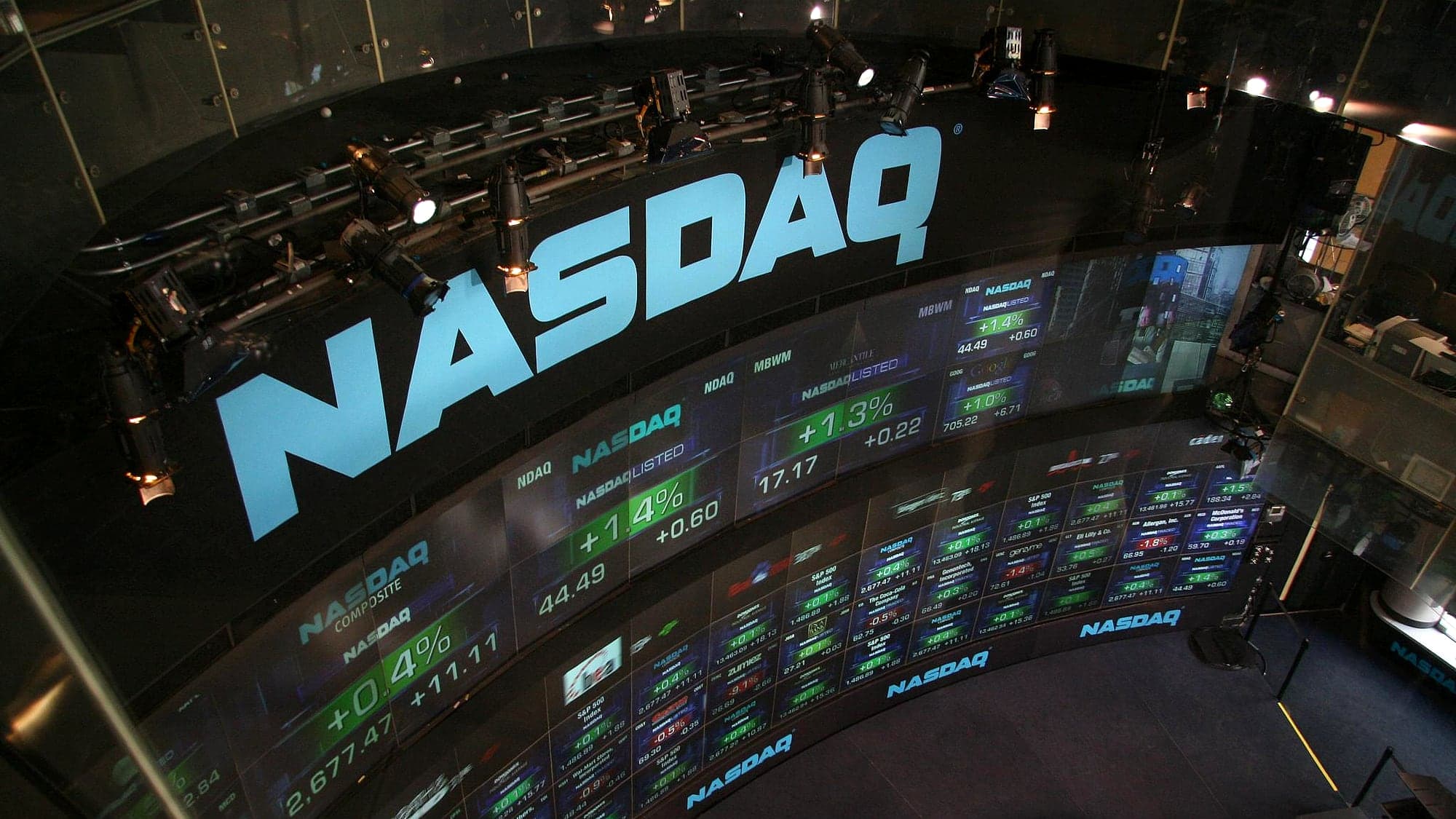
- Cover: "NASDAQ stock market display.jpg" by bfishadow, via Flickr and Wikimedia Commons, licensed under CC BY 2.0. Cropped, resized and tone-adjusted.
- In the text: "CERN, Genéve (46877471004).jpg" by Torbjorn Toby Jorgensen, via Flickr and Wikimedia Commons, licensed under CC BY-SA 2.0. Resized; the modified version is distributed under the same licence.
- In the text: "Lead-Cooled Fast Reactor Schemata.svg", Idaho National Laboratory, vector version by Beao, via Wikimedia Commons, public domain. Converted to a raster image.
Sources
- newcleo and NewHold Investment Corp III — merger announcement filed with the SEC, 27 May 2026; newcleo press releases of 21 and 22 September 2026.
- Novartis — announcement of the acquisition of Advanced Accelerator Applications, filed with the SEC, 30 October 2017.
- Renaissance Capital — the IPO price of Advanced Accelerator Applications, 10 November 2015.
- Milano Finanza — profile of Stefano Buono (April 2025), articles on newcleo (September and December 2024), interview with Buono and the Nasdaq debut (22 September 2026).
- Investing.com Italia — newcleo's Nasdaq debut, 23 September 2026.
- Il Sole 24 Ore — profile of Stefano Buono and the auditors' warning on newcleo, August 2025.
- EconomyUp — the launch of newcleo, 31 August 2021.
- StartupBusiness — the capital increase of up to 1 billion euros, 20 March 2023.
- World Nuclear News — the newcleo-Oklo agreement (17 October 2025) and the installation of the Precursor (May 2026).
- U.S. Nuclear Regulatory Commission — the page on the MOX Fuel Fabrication Facility at Savannah River and newcleo's presentation, March 2026.
- ANSA — final approval of the nuclear bill, 23 September 2026.
- Interviews with Stefano Buono — Made IT Podcast; Otto, the University of Turin magazine.
- Wikipedia — "Energia nucleare in Italia" (Italian). it.wikipedia.org
- Wikipedia — "Referendum abrogativi in Italia del 1987" (Italian). it.wikipedia.org
- nuclear
- energy
- reactors
- Nasdaq
- SPAC
- Stefano Buono
- listing