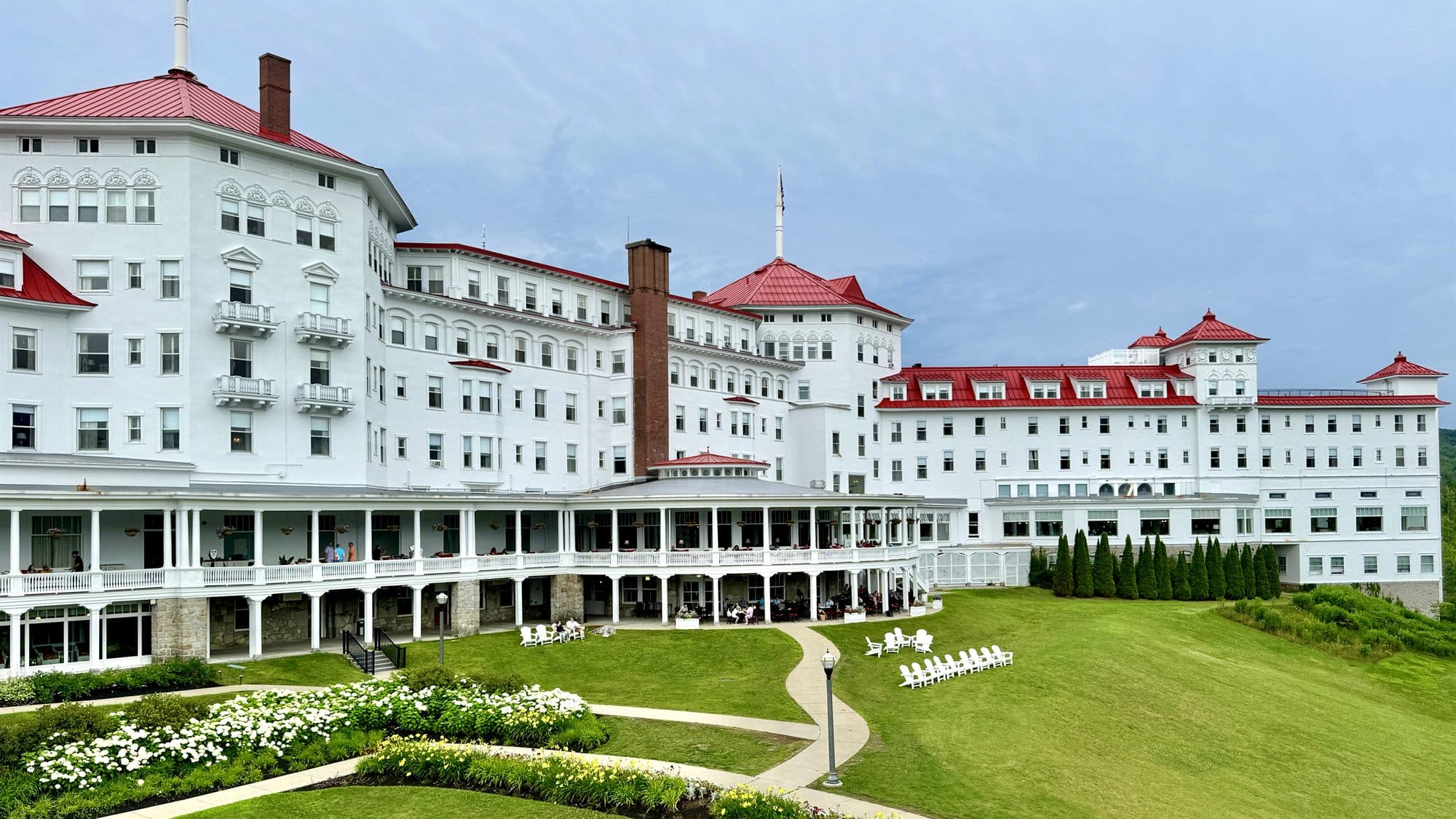
July 1st 1944. At the Mount Washington Hotel, an isolated resort in the White Mountains of New Hampshire, 730 delegates from 44 countries arrive. The war in Europe is still being fought: the Normandy landings were less than a month earlier, Paris is occupied, and many delegates have sons at the front. The work is split across three commissions, and the division already says a great deal: the one on the Monetary Fund, where the exchange rates are settled, is chaired by the American Harry Dexter White; John Maynard Keynes, the most famous economist on the planet and suffering from heart disease, gets the one on the Bank for Reconstruction. Keynes runs it at a pace that exasperates the Americans: Dean Acheson, head of the US delegation on that commission, complains that before he has even found the paragraph under discussion, Keynes has already said "I hear no objection" and moved on. On July 19th he collapses on the hotel stairs: a heart attack is reported, and obituaries even appear in Germany. Three days later he is back on his feet and proposes the adoption of the final act. That document would decide, for the next eighty years, who issues the money the world keeps its accounts in.
If the Bretton Woods system ended more than half a century ago, why are we still arguing about its rules in 2026 — and why is the country now asking to change them the very one that wrote them?
It was not a negotiation. It was a creditor's blueprint
The first thing to dispel is the image of 44 nations negotiating as equals. At the end of the war the United States held around two thirds of all the monetary gold on the planet. The United Kingdom was effectively insolvent: it owed money to Washington and to the countries that had hosted its armies, from India to Egypt.
There were two plans on the table. Keynes's proposed a Clearing Union and a supranational unit of account, the bancor, with a feature that is its real political heart: penalising not only deficit countries but surplus ones too, because for Keynes a trade imbalance is the responsibility of both sides. White's, drawn up by the head of monetary research at the US Treasury, proposed a smaller fund and placed the entire burden of adjustment on deficit countries, leaving those in surplus free.
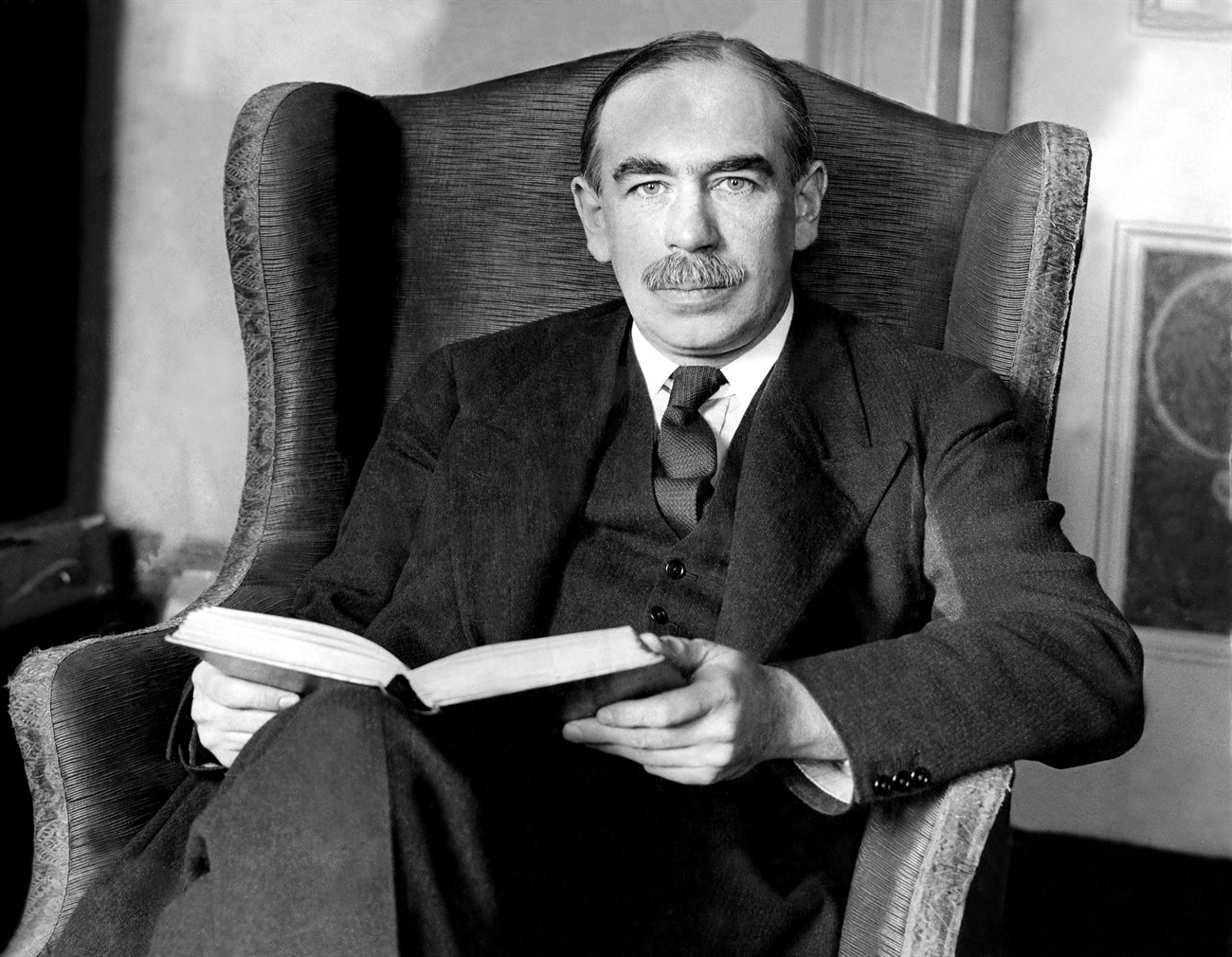 John Maynard Keynes in 1929. Fifteen years later he arrived at Bretton Woods as the world's most famous economist, and with the losing plan: the bancor was never adopted.
White's plan won, and not on technical merit. In 1944 the country in structural surplus was the United States: accepting Keynes's symmetry would have meant signing a constraint against itself. Bretton Woods was not a compromise between economists, it was the translation into rules of the position of whoever had the gold in the vault. Keep that in mind, because it comes back later, inverted.
The architect of the dollar also worked for Moscow
Harry Dexter White, the man who imposed the American plan and who in 1946 became the first US director of the IMF, was accused by two defectors — Elizabeth Bentley in 1945 and Whittaker Chambers in 1948 — of passing confidential information to the Soviets. He testified before the House Un-American Activities Committee on August 13th 1948 denying everything, had a heart attack immediately afterwards and died three days later, aged 55. The firmest evidence emerged decades later with the Venona project, the archive of Soviet cables decrypted by the Americans, where he appears under the code name "Jurist". The Moynihan commission, in 1997, wrote that his involvement seems established; historians remain divided over what he believed he was doing.
This is not backstage colour: the dollar system was designed by a man who openly argued for lasting economic cooperation between the United States and the Soviet Union. The USSR signed the final act and then never ratified it: in Moscow's own formula, the IMF and the World Bank were branches of Wall Street. The system was born already halved: half the planet stayed out of it by choice.
The load-bearing wall nobody remembers
If you were to remember one thing about Bretton Woods, it is this, not gold at $35 an ounce. Article VI of the IMF's Articles of Agreement explicitly recognises the right of member countries to apply the controls necessary to regulate international capital movements, provided they do not restrict payments for current transactions. That is all the rule says; the rest is historical reading, but solid: Keynes and White, who disagreed on almost everything, both favoured capital controls, and historians treat them as part of the design, because without the ability to slow speculative flows at the border fixed exchange rates become far harder to defend.
The reason is what economists call the trilemma: between a fixed exchange rate, free movement of capital and an autonomous monetary policy you pick two, never all three. Bretton Woods chose parities that were fixed but adjustable in agreement with the IMF, kept national monetary autonomy, and left governments the option — not the obligation — of restraining capital; after 1973 the world made the opposite choice.
It is the key to half a century of currency crises. The ERM in 1992 and Asia in 1997 are the same repeated mistake: a pegged exchange rate, capital free to come and go, and a central bank that still wanted to set its own rates. The euro, by contrast, is not a trilemma case, and it is worth not confusing it: the individual eurozone states did not lose monetary autonomy in 2010, they had handed it to the ECB from the start. There the trilemma applies to the area as a whole, and 2010-2012 is a sovereign debt and banking crisis inside a monetary union. And anyone calling today for "a new Bretton Woods" is asking, often without realising it, to put the chains back on capital: the one thing no Western government intends to do.
Thirteen years, not twenty-seven
The system is told as a quarter-century of stability, from 1944 to 1971. Two things need separating here. The institutions were standing early: the IMF began financial operations on March 1st 1947. The exchange rate mechanism came much later: the main European currencies became fully convertible only at the end of 1958, and before that the system worked at half strength, propped up by the Marshall Plan and a lattice of exchange restrictions. If you count the years in which it worked as designed, Bretton Woods runs from 1958 to 1971. Thirteen years: it is one way of counting, not the only one, but it captures better how short-lived the version everyone remembers actually was.
As early as 1959 the Belgian economist Robert Triffin had explained to Congress why it could not last. The world needed dollars in order to grow, and the only way for the United States to supply them was to spend more than it took in; but the more dollars circulated abroad, the less credible the promise to convert them all into gold at $35 an ounce became. The system could die of liquidity or of confidence, with no stable point in between: the end was written into the architecture, not into the character of a president.
The rest was emergency engineering. The London Gold Pool, created in November 1961, put eight central banks to work defending the gold price by selling metal in London. In March 1968, facing demand they could no longer absorb, they dismantled it and moved to a two-tier market: an official price of $35 between central banks, a free one for everybody else. That, and not 1971, is where many historians place the start of the terminal phase: the official $35 still applied between central banks, but it had stopped bearing any relation to what gold was worth on the market. Meanwhile something had grown that did not exist in 1944: the eurodollar market, dollar deposits held outside the United States, above all in London, beyond the reach of American regulators. By the end of the 1960s it was worth tens of billions. The system's load-bearing wall was not knocked down by a political decision: it was bypassed by a market born outside it.
Camp David, three days in August
From August 13th to 15th 1971 Nixon shut himself away at Camp David with fifteen or so advisers, among them Arthur Burns of the Fed, Treasury secretary John Connally and a young under-secretary named Paul Volcker. On the evening of the 15th he went on television and announced three things at once: suspension of gold convertibility for foreign governments, a ninety-day freeze on wages and prices, and a 10% tariff on imports.
It was not the formal end. In December 1971 the Smithsonian agreement tried to patch the system up with a parity of $38 an ounce and wider bands: it lasted a little over a year. In February 1973 came a second devaluation, in March Japan and the European Community let their currencies float, and in 1976 the Jamaica accords wrote down a reality that had already happened.
And here is the surprise: with the gold anchor gone, everyone expected the dollar to lose its crown, and instead it became more dominant than before. Its strength lay not in the metal but in something harder to replicate: a deep, predictable government bond market — the same structure the petrodollar rests on — where anyone can park hundreds of billions and sell them again the same day. For as long as Bretton Woods lasted the dollar really was convertible into gold; once that guarantee was lost, another one surfaced that had never been written down anywhere: the fact that everybody else used it.
Institutions outlive the systems they were built to run
The fixed exchange rate system is dead. The IMF and the World Bank are not, and that says a great deal about how international power works: the IMF was created with a broad mandate, from monetary cooperation to lending against balance-of-payments imbalances, but its daily work was policing parities — and from 1973 there were almost none left to police. Instead of closing, it reinvented itself as an emergency lender, with the adjustment programmes and conditionality we know today.
What it did not reinvent is its governance. Some key decisions — revising quotas, amending the Articles, allocating new special drawing rights — require 85% of the votes, and the United States holds about 16.5%: on its own it can block them. China is worth a little over 6%. Eighty years on, the hierarchy decided in that hotel is still written into the rulebook, even though the world it described no longer exists. Institutions, it turns out, are harder to change than the systems they were built to administer.
2026: Keynes inverted
And here is the inversion. In November 2024 Stephen Miran, an economist at Hudson Bay Capital, published a paper destined to become the theoretical frame of American trade policy: reserve currency status, it argues, is a cost rather than a privilege, because world demand for dollars keeps the exchange rate too high and makes American manufacturing uncompetitive. The route it sets out runs through tariffs used as leverage and a currency understanding with allies, dubbed by the press the "Mar-a-Lago accord"; among the options considered is converting the Treasuries held by foreign central banks into ultra-long bonds. None of this was ever negotiated: it is a paper, not a treaty. Miran went on to chair the Council of Economic Advisers and, on September 16th 2025, joined the Federal Reserve board on an unexpired term running to January 31st 2026, staying on past that date as the law allows. He left the White House in February 2026 and the Fed on May 21st, shortly before Kevin Warsh was sworn in as chair. The point is not his biography: it is that for a year that thesis travelled from an asset manager's paper into the two rooms where American economic policy is decided.
Now read the argument again. A country claims the international monetary system dumps the cost of adjustment on it asymmetrically, and asks for the rules to be rewritten. That is, word for word, the case Keynes took to Bretton Woods in 1944 and that the United States rejected. In the meantime Washington has moved to the other side of the table: from the world's creditor holding two thirds of the gold to a debtor with more than $40 trillion of federal debt.
The 2026 numbers describe slow erosion, not collapse. The dollar remains at around 57% of official currency reserves — that share is calculated on currencies alone, gold is outside the count — and is holding despite two years of trade tension. But in the first half of 2025 the dollar index, the DXY, lost about 11%: the worst first half since 1973, the year exchange rates moved definitively to floating. And according to the ECB, at the end of 2025 gold accounted for 27% of global official reserves — here the metal is included — overtaking US Treasuries at 22%. The footnote matters, though, because it turns the headline around: the crossover is almost entirely a price effect, gold rose about 60% in 2025, and at constant prices, those of end-2023, the ECB itself calculates that Treasuries would still be at 26% against gold's 16%. It is not a reallocation, it is a revaluation. What remains is the physical figure, which does not depend on prices: central banks bought around 850 tonnes in a year, after three years above a thousand.
Nobody will convene another Bretton Woods
In 1944 the world's monetary trust was negotiated in three weeks, in a hotel, by men with names and surnames, and written down. Today there is nothing comparable in the calendar: no conference, no Keynes and no White, no final act to put to a vote. The reorganisation happens by silent accumulation: a central bank buying a hundred tonnes of gold, a payment system settling in local currency, a manager raising the non-dollar share by two points. None of these moves is news on its own; together they do what Bretton Woods did in twenty-two days.
The difference is that a negotiated system has written rules and revision procedures, so it can be reformed. One that forms by erosion cannot: it is discovered after the fact, when someone tries to use it under stress and it does not work as assumed. In 1971 one evening on television was enough to certify the end of the old order; the next regime change, in all likelihood, will not even have that.
The real question, for anyone investing or simply holding savings in a currency, is not "when does the dollar collapse". It is more uncomfortable: what is the monetary peace we have enjoyed for eighty years worth, and what does it cost to insure against the possibility that it ends without anyone announcing it — because that is exactly what central banks have been doing, tonne after tonne, for four years.
Image credits
- Cover: "Mount Washington Hotel, Bretton Woods, NH - 54305965743.jpg" by w_lemay, via Wikimedia Commons, licensed CC BY-SA 2.0. Cropped and tonally adjusted; the modified version is distributed under the same licence.
- In the text: "John Maynard Keynes 1929.jpg", author not stated, via Wikimedia Commons, public domain. Resized and tonally adjusted.
Sources
- Federal Reserve History — "Creation of the Bretton Woods System". federalreservehistory.org
- Federal Reserve History — "Gold Convertibility Ends": Nixon's announcement of August 15th 1971. federalreservehistory.org
- International Monetary Fund — Articles of Agreement, Article VI on capital movements. imf.org
- International Monetary Fund — COFER data on the currency composition of official reserves.
- The National WWII Museum — "The 1944 Bretton Woods Conference". nationalww2museum.org
- New Statesman — "When Keynes went to America": the conference seen from the British delegation. newstatesman.com
- CIA, Center for the Study of Intelligence — "Treasonable Doubt: The Harry Dexter White Spy Case". cia.gov
- European Central Bank — "The international role of the euro", June 2026: the shares of gold and Treasuries in global reserves, including at constant prices. ecb.europa.eu
- Atlantic Council — "Understanding the debate over IMF quota reform": voting weights inside the Fund. atlanticcouncil.org
- Hudson Bay Capital — Stephen Miran, "A User's Guide to Restructuring the Global Trading System", November 2024. hudsonbaycapital.com
- PolitiFact — the fact-check on the fall of the dollar in the first half of 2025. politifact.com
- dollar
- monetary system
- IMF
- gold
- history