In 2025 the Coca-Cola system sold 33.8 billion unit cases against 33.7 billion in 2024. The unit case is the company's own unit of measurement and equals 192 fluid ounces of finished beverage, that is 24 servings of roughly 237 millilitres: a little over five and a half litres. In volume terms, then, growth was minimal. And yet revenues rose 2% to $47.9bn and the comparable operating margin went from 30.0% to 31.2%. How does a company earn more while selling almost the same volume? The convenient answer is "the brand". The more useful one is different: for two years Coca-Cola mostly sold price. In 2026 it went back to selling volume.
The business that outsourced most of the factory
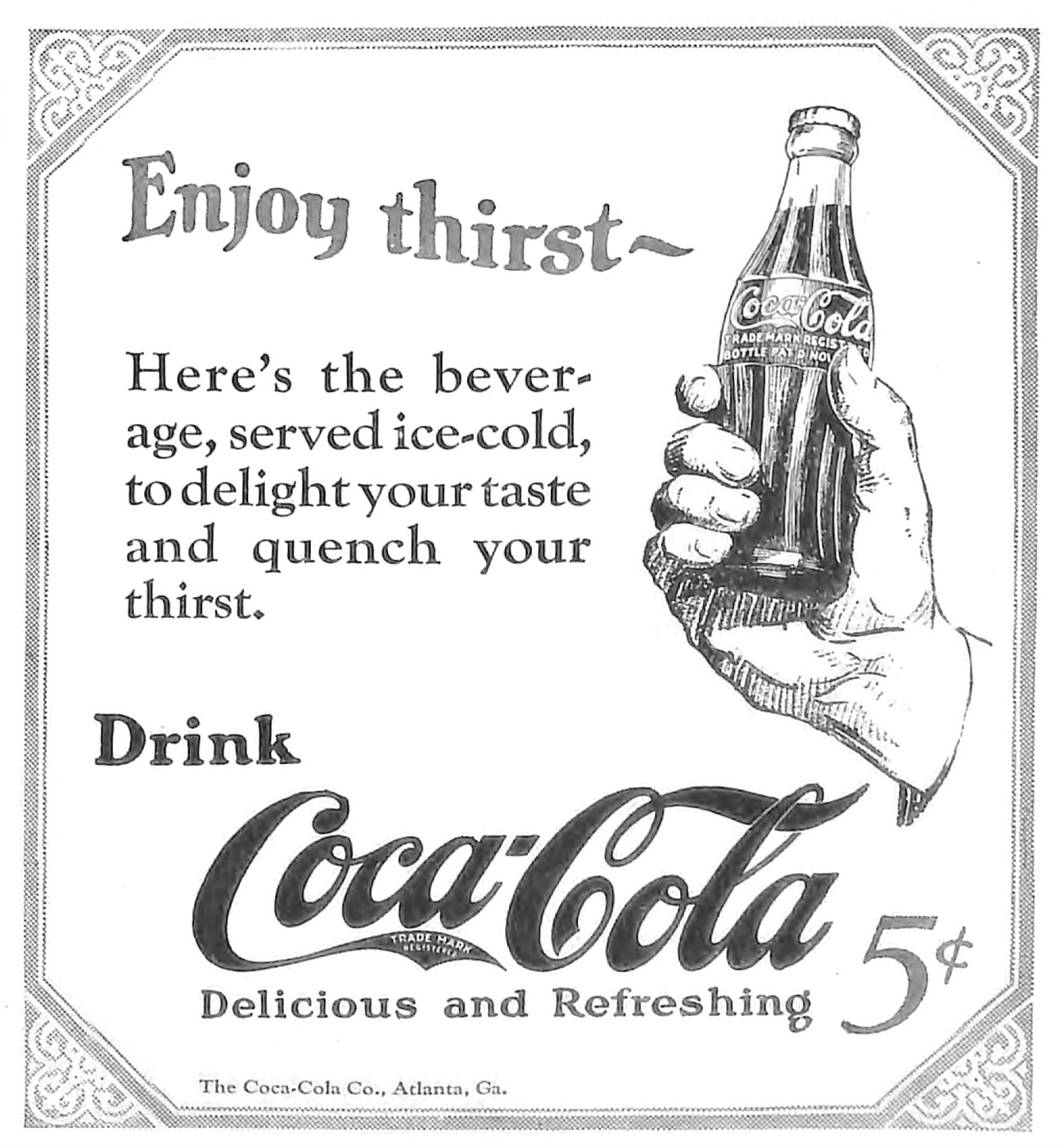
Coca-Cola was born in Atlanta in 1886, created by John Pemberton, a pharmacist. The decisive step, though, came later: Asa Candler began acquiring rights to the drink in 1888 and, according to the company's own account, reached sole ownership in 1891 for a total of $2,300. Eight years later he granted Benjamin F. Thomas and Joseph B. Whitehead, two Chattanooga lawyers, the exclusive right to bottle Coca-Cola across almost all of the United States. According to the Tennessee Encyclopedia, those rights were sold for one dollar.
Seen with today's eyes, that 1899 signature is the founding act of the business model. Candler kept the formula, the concentrate and the trademark for himself, and handed a network of local entrepreneurs the capital and the labour needed to carry the drink from the soda fountain to the consumer. A hundred and twenty-seven years later, the structure is still recognisable.
How the machine actually works
The Coca-Cola Company mainly sells concentrates and syrups to bottlers, which add water and sweeteners, package the product and distribute it to shops. But that is not all of it: the accounts explicitly distinguish between concentrate operations and finished-product operations, because the group also sells ready-to-drink beverages and directly owns part of the bottling network. The difference from a classic manufacturer is that the heaviest slice of the industrial work sits outside the consolidated perimeter.
The numbers tell it better than any definition. In 2025 Coca-Cola invested $2.1bn in capital expenditure on $47.9bn of revenues: a little more than 4%. The comparable operating margin was 31.2%. Beverages carrying brands the group owns or licenses are sold in more than 200 countries and territories and account, on the company's own estimates, for 2.2 billion of the roughly 65 billion servings of beverages of every kind consumed around the world each day.
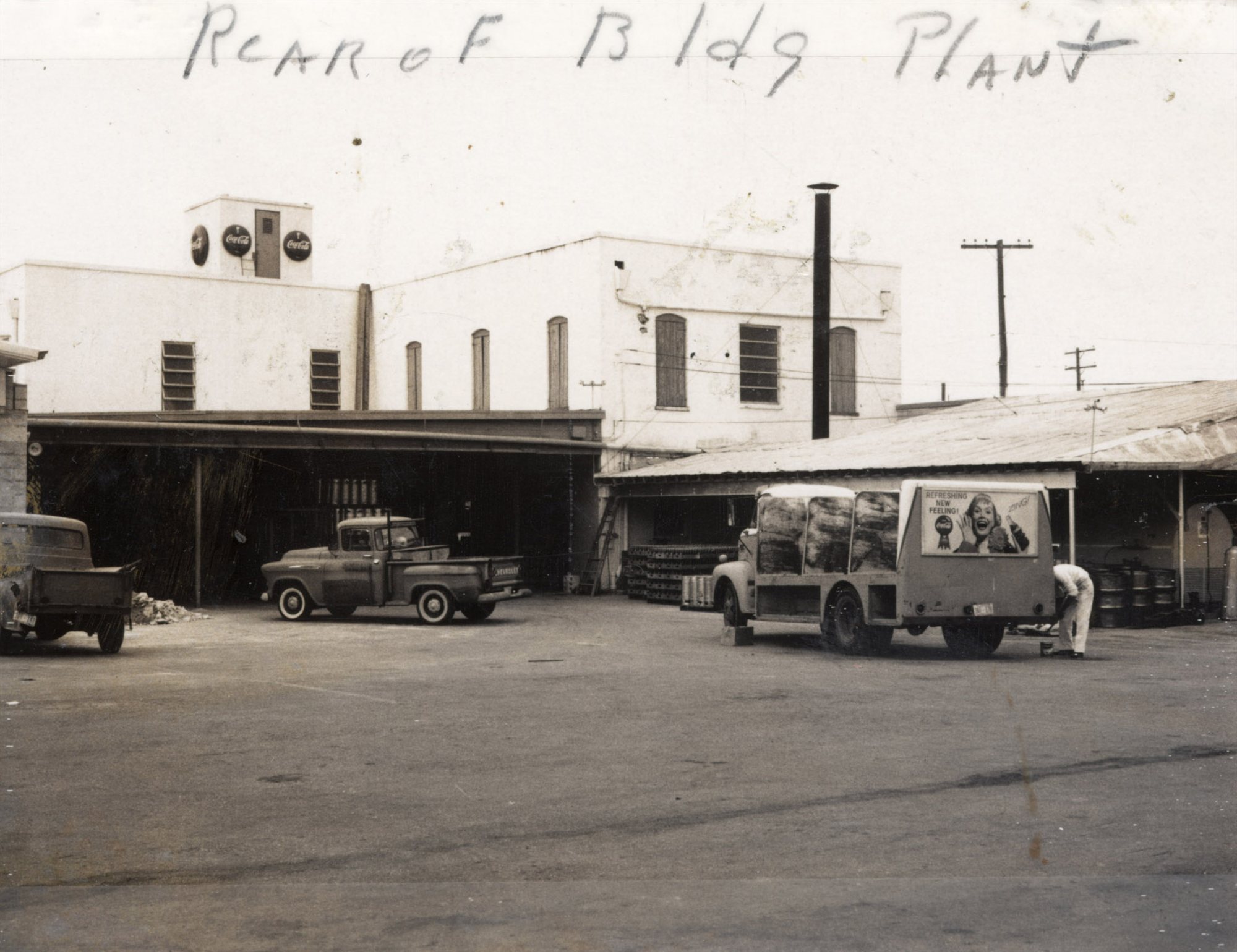
The financial consequence is the interesting part: a significant share of the benefit coming from price can turn into margin without requiring a proportional increase in directly controlled production capacity. Not automatically, though. In 2025 the company itself explained the margin expansion with organic revenue growth and cost control, partly offset by higher marketing spend and higher commodity costs.
The years when growth was price
Here is the point almost nobody looks at. In 2024 organic revenues grew 12%, but price/mix — the combined effect of prices and sales composition — contributed 11 points, against a meagre +1% from volumes. And the company itself specified that around 5 of those 11 points came from markets with very intense inflation: not brand power, but currencies losing value and price lists chasing them.
In 2025 the push faded: price/mix +4%, concentrate shipments +1%, volumes flat overall. North America lost 1% of volume over the year, EMEA gained 3%. The first quarter of 2025 had been the worst, with North America at -3%: the company attributed it to weather, consumers being careful with their wallets, and the backlash from a fake video circulating on social media claiming Coca-Cola had reported undocumented workers to the immigration authorities. James Quincey, then chief executive, called it "completely false".
The more prudent reading of those two years is that a significant part of what was told as pricing power was in fact a pass-through of inflation. Real, profitable, but not repeatable forever.
2026: volume returns, price slows
In the first six months of 2026 the relative weight of the two levers flipped. In the first quarter volumes grew 3% and price/mix 2%. In the second, revenues rose 7% to $13.4bn, with volumes up 5% driven by India, China, the United States and Brazil and price/mix still stuck at 2%; the quarter's comparable operating margin rose to 35.6%. At the end of July the company raised its guidance for the year: organic growth of around 5%, comparable earnings per share up 9-10%, free cash flow of about $12.4bn.
Careful not to overstate it: Coca-Cola has not stopped raising prices, price/mix remains positive. The relevant fact is that in 2026 volume growth went back to weighing more than price in organic growth. Which is, in the end, the way this company has always worked best.
Where the profit really sits: the fight with the US tax authorities
The best proof that Coca-Cola's value lies in intangible assets rather than plants is a tax case. The Internal Revenue Service challenges the way the group split profits between the American parent and the foreign affiliates that manufactured, distributed and promoted the products in local markets under licence. For the years 2007-2009 the tax authorities reallocated more than $9bn of income from the foreign licensees to the US company.
The Tax Court sided substantially with the IRS, with additional tax of about $2.7bn for those three years. After the formal decision of August 2024 Coca-Cola paid roughly $6bn in tax and interest while continuing to appeal; the appeal was argued before the Eleventh Circuit Court of Appeals in June 2026 and, as of mid-September 2026, no decision has been handed down.
The real stake is higher, because the same method can be extended to later years. As early as the end of 2020 the company estimated a possible additional aggregate liability, tax and interest combined, of around $12bn; with the interest accrued since, press reconstructions in 2026 put the order of magnitude close to $20bn. Whatever the outcome, the substance of the dispute says a great deal: the argument is over how much of the worldwide profit should be attributed to American intellectual property and how much to the work done locally.
What the world drinks
The idea that Coca-Cola is becoming "less Coca-Cola" should be taken with care. According to the 2025 annual report, sparkling soft drinks accounted for 69% of worldwide volumes in both 2025 and 2024: identical. Diversification exists but is slow, and in 2025 it was uneven: water, sports drinks, coffee and tea grew 2%, while juice, dairy and plant-based lost 3%.
2026 shows something more encouraging on this front: in the second quarter Coca-Cola Zero Sugar grew 16%, the water-sports-coffee-tea category 6%, and even juice and dairy returned to +2%. In parallel, since the autumn of 2025 the company has introduced in the United States a Coca-Cola sweetened with cane sugar, sold alongside the traditional one made with corn syrup.
The real risk is not that consumers stop drinking Coca-Cola: it is the fragmentation of drinking occasions. A person can go on loving the brand and, on the same day, choose water, an energy drink, a tea or a coffee. The question is not whether Coca-Cola will defend Coca-Cola, but how much of a person's overall beverage basket it can occupy.
On leadership, since March 31st 2026 the chief executive has been Henrique Braun, a Brazilian and previously the group's chief operating officer; Quincey moved to executive chairman after nine years at the top.
In the market: the problem is not Coca-Cola, it is what it costs
In February 2026 the board approved the 64th consecutive annual dividend increase, taking the quarterly payout from 51 to 53 cents: $2.12 a year per share.
One widely misread figure needs clarifying, though. In 2025 operating cash flow was $7.4bn and free cash flow $5.3bn: low numbers for a company of this size. The reason is not the business but the final payment tied to the fairlife acquisition, $6.1bn paid in the first quarter of the year: a contractual component of the deal, not a recurring cost. Excluding that item, 2025 free cash flow was $11.4bn, and for 2026 the company estimates about $12.4bn.
What remains is the part no set of accounts can settle: the price. An investor does not buy the company in the abstract, they buy it at a multiple. Coca-Cola consistently trades on the multiples of a high-quality defensive asset, and the real question is not whether the competitive advantage exists — it does, and the numbers show it — but how much of that advantage is already priced in.
The numbers, as of mid-September 2026: the stock trades at around $88, for a market capitalisation of roughly $380bn, with a 52-week range between $65 and $92. The price/earnings ratio is about 26 times and the dividend yield around 2.4%. It is the multiple of a quality defensive company priced as such: the market is not betting on an acceleration, it is paying for predictability.
Closing thoughts
The economic chain of this company is a straight line: brand, pricing power, margins, cash, dividends. But the last two years have shown that the price link is not infinite and that part of what looked like pricing power was inflation passing through. In 2026 growth went back to depending on how many servings are actually sold.
If Coca-Cola's strength is turning a daily habit into a return for shareholders, the question to ask is not whether that habit is solid, but how much of it you are already paying for in the share price.
This article is for information and editorial purposes. It is not investment advice: consider your own circumstances or consult a licensed adviser before making any investment decision. The financial figures reported here come from official releases and filings by The Coca-Cola Company; the estimate of total exposure in the tax case and the historical account of 1899 are attributed to the respective outside sources and are not figures certified by the company. Data is current as of mid-September 2026 and can change quickly. The author holds no positions in the securities mentioned.
Image credits
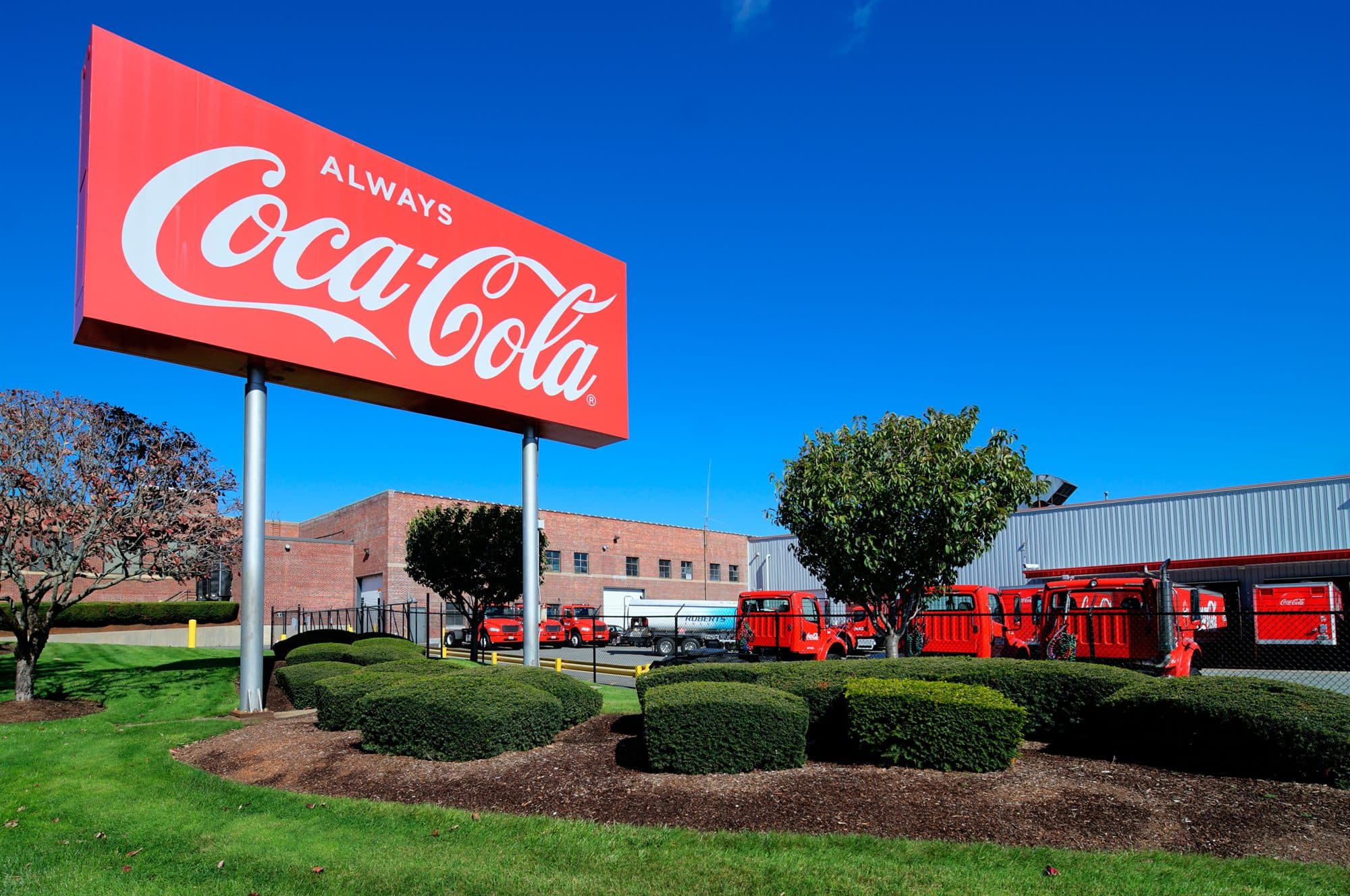
Cover: "Coca Cola Beverages Northeast.jpg" by Kenneth C. Zirkel, via Wikimedia Commons, licensed CC BY-SA 4.0. Resized; the modified version is distributed under the same licence.
In the text: "Coca-Cola ad 1923-11.png", advertisement published in The Elks Magazine in November 1923, author not stated, via Wikimedia Commons, public domain. Resized and converted to JPEG.
In the text: "Rear of Coca-Cola plant, Key West, Florida, circa 1965.jpg" by Florida Keys--Public Libraries, via Wikimedia Commons, licensed CC BY 2.0. Resized.
Sources
- The Coca-Cola Company — "Coca-Cola Reports Fourth Quarter and Full Year 2025 Results", February 10th 2026. investors.coca-colacompany.com
- The Coca-Cola Company — "Coca-Cola Reports Second Quarter 2026 Results and Raises Full Year Guidance", July 28th 2026. investors.coca-colacompany.com
- The Coca-Cola Company — "Coca-Cola Reports First Quarter 2026 Results and Updates Full Year Guidance", April 28th 2026. investors.coca-colacompany.com
- The Coca-Cola Company — "Coca-Cola Reports Fourth Quarter and Full Year 2024 Results", February 11th 2025.
- The Coca-Cola Company — Form 10-K for fiscal year 2025, filed February 20th 2026 with the SEC. sec.gov
- The Coca-Cola Company — "Updated Information Related to Tax Audits", January 2021 (SEC).
- The Coca-Cola Company — Form 10-Q for the second quarter of 2026, with the update on the tax litigation. sec.gov
- Al Jazeera — "Why Coca-Cola and the US taxman are at war over a $20bn tax bill", June 22nd 2026. aljazeera.com
- The Coca-Cola Company — "Board of Directors of The Coca-Cola Company Elects New Officer and Approves 64th Consecutive Annual Dividend Increase", February 19th 2026. investors.coca-colacompany.com
- The Coca-Cola Company — CEO succession plan: Henrique Braun to succeed James Quincey, December 10th 2025.
- Tennessee Encyclopedia — entry "Coca-Cola Bottling Company". tennesseeencyclopedia.net
- StockAnalysis.com — "Coca-Cola (KO) Stock Price & Overview": price, market capitalisation, multiples and dividend yield as of mid-September 2026. stockanalysis.com
- beverages
- consumer
- brands
- dividends
- tax