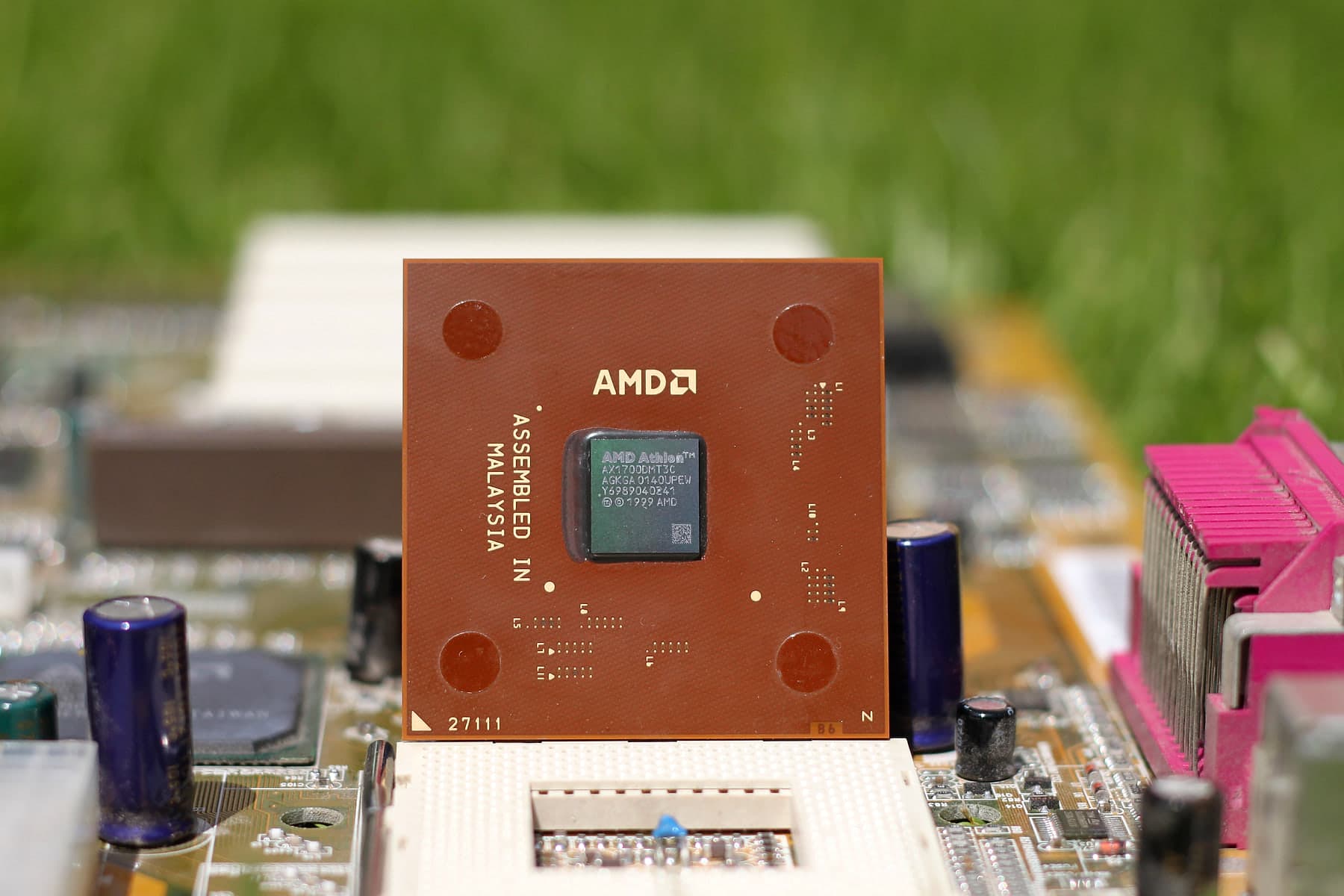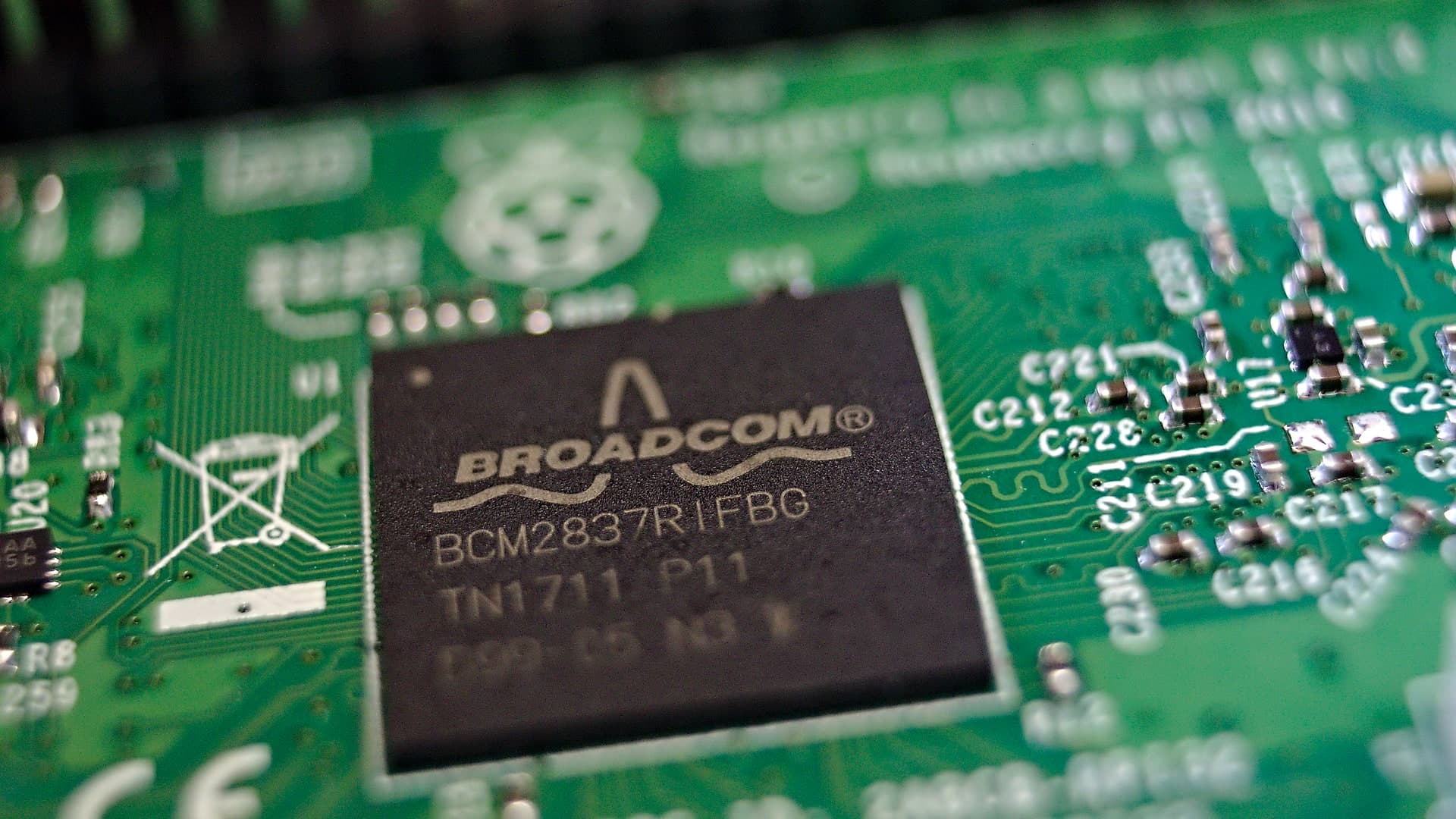
The iPhone in your pocket contains a chip designed by Apple. Many of the artificial intelligence models you use every day were trained on GPUs designed by Nvidia. Google's servers run custom chips drawn up with Broadcom, Amazon's data centres run chips Marvell worked on, and AMD's new AI racks carry accelerators designed by AMD. Different names, often competing with one another. But follow each of those chips to the point where it stops being a drawing and becomes an object, and you almost always arrive in the same place: a handful of plants in Taiwan, run by a company that never appears on the box.
How is it possible that the company half the world's technology industry depends on is almost unknown to the people using its chips every day?
The origins: the man Texas Instruments let go
Morris Chang was born in 1931 in Ningbo, China. He studied in the United States, at MIT, and in 1958 joined Texas Instruments, then one of the biggest names in semiconductors, where he stayed twenty-five years and became one of its leading executives. In 1983 he left. After a year as president of General Instrument, in 1985 he accepted the Taiwanese government's invitation to lead ITRI, the island's public industrial research institute.
That is where the idea took shape. In the mid-1980s anyone who wanted to sell chips also had to make them, and building a plant already cost a fortune. Chang saw that companies were emerging which could design chips but could not afford a fab, and he inverted the industry's logic: a company that manufactures only chips designed by others, never designing any of its own. That way it never competes with its customers, who can hand over their most confidential designs without fearing they will end up in a rival product. In February 1987 Taiwan Semiconductor Manufacturing Company was founded, with the Taiwanese government and the Dutch group Philips among its founding shareholders. At first customers trusted it only with production on already-superseded technologies.
Chang stepped back from running the company in 2005, returned in 2009 to handle the financial crisis and retired for good in 2018. The chairman and chief executive today is C.C. Wei.
The model that changed the industry
The technical name for what Chang invented is "pure-play foundry": contract manufacturing and nothing else. The biggest consequence is for everybody else. If someone else provides the fab, making chips only requires knowing how to design them. That is how the world of "fabless" companies came about: Nvidia, Qualcomm, Broadcom, Marvell and, from 2009, AMD too, which spun off its own plants that year.
The result is an extremely specialised ecosystem in which everyone invests only in their own link of the chain. It works beautifully as long as every link holds. The uncomfortable question is what would happen if the central link broke suddenly: none of the industry's big names has a spare fab, because the system was built precisely so that nobody would need one.
Why nobody can copy it
TSMC does not sell a product: it sells the ability to turn a design into millions of working chips. And that is the hardest thing in the industry to replicate.
The first obstacle is capital. In 2025 TSMC spent $40.9bn on capital expenditure, and for 2026 it has raised its forecast to somewhere between $60bn and $64bn. A leading-edge fab needs machines that very few suppliers in the world know how to build, and which cost hundreds of millions each.
The second is yield: the share of chips that come off the line working. Every chip goes through hundreds of process steps, and the smallest error in any one of them means scrapping it. Getting yield to profitable levels on a new process takes years of experience, and experience cannot be bought.
The third is trust. On the July 2026 conference call, answering a question about competition, Wei quoted a customer of his: choosing a process technology and bringing it up to speed "is not like buying milk at 7-Eleven". A customer develops its chips for years alongside TSMC's engineers, and switching supplier means starting almost from scratch.
Competitors are trying: Samsung has been making advanced chips for years and Intel wants to sell its manufacturing capacity to other companies too. But one number is enough to convey the distance: according to TrendForce, in the second quarter of 2026 TSMC held 72.5% of the global foundry market, against Samsung's 5.9%.
The nanometre has become a label
Chip headlines almost always feature the nanometre number: 5, 3, 2. For decades it really did denote a physical dimension of the transistor; today it is mostly a commercial name for a generation, no longer corresponding to any precise measurement of the chip.
For its 2-nanometre process, called N2 and in volume production since the fourth quarter of 2025, TSMC states that at equal performance a chip consumes up to 30% less power than the previous generation. That figure says far more than the "2" in the name. It is also the first process in which TSMC uses "gate-all-around" transistors, which reduce current leakage. The next step, A16, is due from the second half of 2026.
Density, power, performance and yield all move together, and each improvement costs more than the last. That is why TSMC's story is also a story about the economics of complexity: every generation demands more investment and more precision, and the number of companies able to sustain that race has shrunk to a very few.
Where the innovation is moving: packaging
A modern AI chip is not a single piece of silicon: it is a processor flanked by blocks of high-speed memory, called HBM, which have to sit a few millimetres away. Bringing them together into a single module is the job of advanced packaging.
TSMC's technology for doing this is called CoWoS, short for "Chip on Wafer on Substrate": the chips are mounted on an intermediate layer of silicon carrying connections far denser than those of a traditional circuit board. It is the technology Nvidia's main AI GPUs are built on, and it has become the industry's real bottleneck. On the same July call, Wei said advanced packaging capacity is still so scarce that it is constraining his customers' growth. The limit today lies not only in making chips ever smaller, but in assembling them.
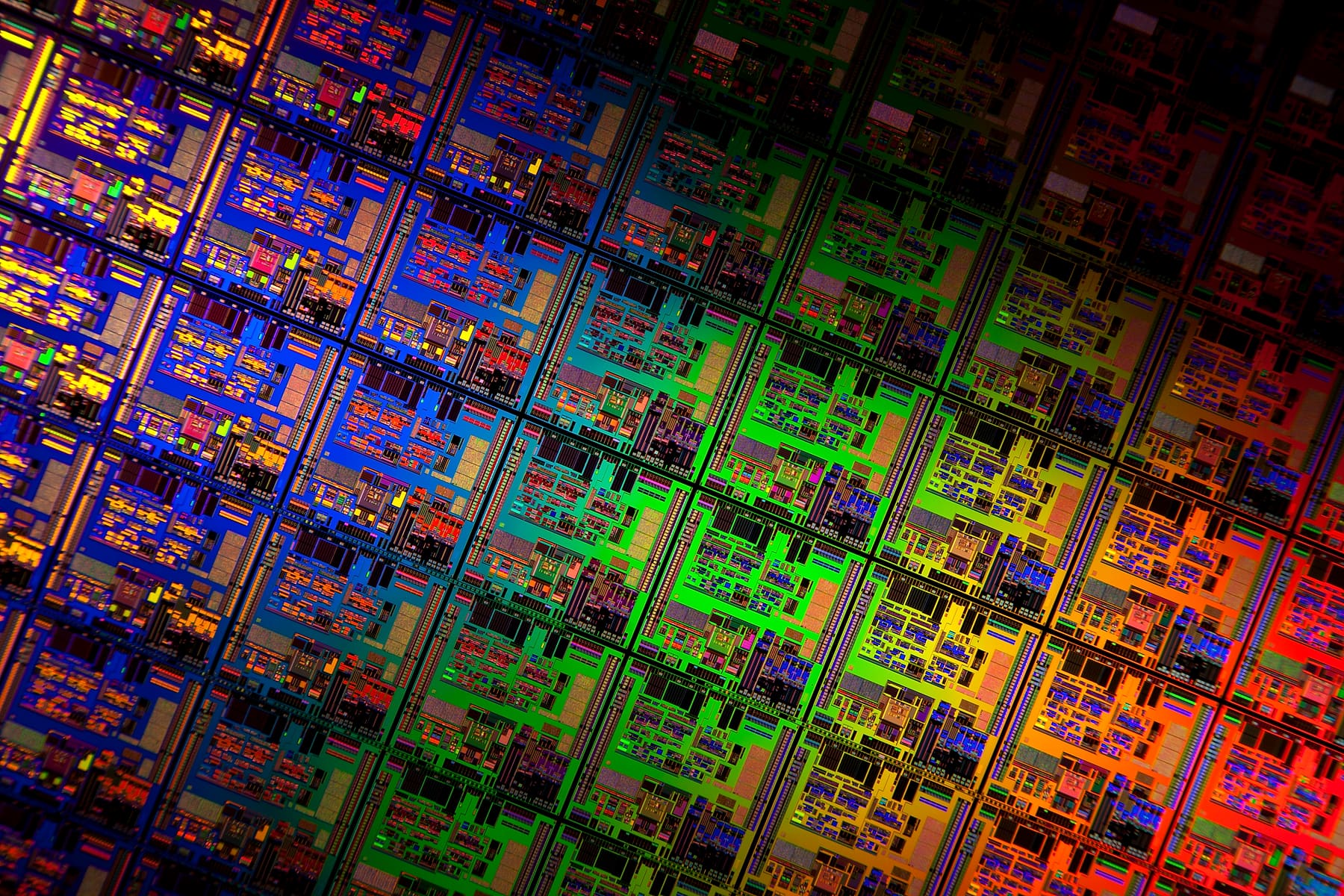 A silicon wafer: each rectangle is a single chip, which will be cut out and assembled only after hundreds of process steps.
The numbers
In 2025 TSMC booked revenue of $122.4bn, more than a third up on the year before. The most interesting figure, though, is not how fast it is growing but where the growth comes from. Chips for high-performance computing — the category TSMC calls HPC, which includes those for artificial intelligence — accounted for 58% of revenue in 2025; by the second quarter of 2026 they had reached 66%, while smartphones, for years the heart of the business, are declining.
In that same quarter, with results published on July 16th, revenue was $40.2bn and net profit grew 77% year on year. For the whole of 2026 the company expects revenue growth a little above 40%.
There is then one fact that explains the change in the company's role better than any figure. TSMC does not publish its customers' names, but for years the largest was Apple. In January 2026 Jensen Huang, Nvidia's chief executive, said on a podcast that Nvidia is now TSMC's largest customer. It is the symbolic shift that has turned TSMC from an essential supplier into strategic infrastructure. Without advanced chips, even the most sophisticated AI model is a program with nowhere to run: the real oil of AI may not be compute, but the ability to produce it.
Taiwan, and the question that really matters
According to a study by Boston Consulting Group and the Semiconductor Industry Association, in 2019 the island hosted 92% of the world's manufacturing capacity for logic chips below 10 nanometres. A concentration like that has turned a private company into a matter of international politics. Hence the phrase "silicon shield": the idea that Taiwanese chips make the island too valuable for anyone to risk interrupting its production.
In recent years TSMC has started building abroad. In Arizona the first plant has been in production since the end of 2024, with yields the company says are in line with Taiwanese ones. On July 16th 2026 TSMC raised its total commitment to the state to $265bn: once the work is complete, roughly 30% of its most advanced capacity should sit there. Other plants are in Japan, at Kumamoto, and under construction in Dresden, Germany.
Politics sits behind this too: under the January 2026 trade agreement, Washington tied lower tariffs on Taiwanese products to Taiwanese companies' investment on American soil. The stated aim is to reverse a decline that has run for more than thirty years: America's share of global wafer production — the silicon discs on which chips are made — fell from 37% in 1990 to less than 10% in 2024.
So is TSMC becoming less Taiwanese? The honest answer is no, it is diversifying risk. On July 17th 2026 Taiwan's government reiterated that keeping the most advanced technology on the island is among its priorities, noting that TSMC is building 13 plants in Taiwan across advanced processes and packaging. And diversifying does not mean replicating Taiwan: a fab can be built anywhere, but the ecosystem of suppliers, engineers, technicians and accumulated know-how built up over almost forty years around Hsinchu and Tainan does not move with a construction site.
The stock
No buy or sell advice here, only the facts. TSMC is listed in Taiwan under the code 2330 and in New York through ADRs under the ticker TSM, where each ADR corresponds to five ordinary shares. In mid-September 2026 the ADR trades at around $414, for a market capitalisation of roughly $2.17trn, with a 52-week range between $258 and $479. As with the other big semiconductor names, at these valuations the market already takes exceptional growth for granted, and beating expectations is no longer enough to move the stock up.
The doubts worth keeping in mind
The first is geopolitical, and the hardest to price: the world's most advanced manufacturing capacity remains concentrated on an island at the centre of tension between the United States and China. American export controls on advanced chips bound for China weigh on it too, and they can change overnight.
The second is that TSMC's vulnerability is also its customers'. Apple, Nvidia, AMD, Broadcom and Marvell design different products, but they share a dependence on the same manufacturing infrastructure. For an investor, that means diversifying across those stocks protects less than it appears to.
The third is margins. Producing abroad costs more than in Taiwan, and management itself has warned that both the new plants off the island and the 2-nanometre ramp will weigh on profitability over the coming quarters.
The fourth is the cycle. The history of semiconductors teaches that periods of scarcity do not last forever. With capital expenditure at all-time highs, a slowdown in cloud giants' spending would leave TSMC with capacity built for demand that is not there.
The fifth is competition — distant today, but backed by governments, the American one above all, which have every interest in seeing Intel and Samsung grow.
TSMC is the clearest example of a company that is invisible and yet systemic: it does not decide which chips exist, but it does decide whether they can be made, in what quantity and on what timeline. It is a position of strength built over almost forty years, and at the same time a single point of failure for an entire industry.
For anyone looking at TSMC as an investor, which weighs more: the advantage of being indispensable, or the risk of being indispensable from a single island?
This article is for information and editorial purposes. It is not investment advice: consider your own circumstances or consult a licensed adviser before making any investment decision. The financial figures reported here come from the company's official communications; market shares are estimates from outside analysts rather than certified data. Data is current as of September 16th 2026 and can change quickly.
Image credits
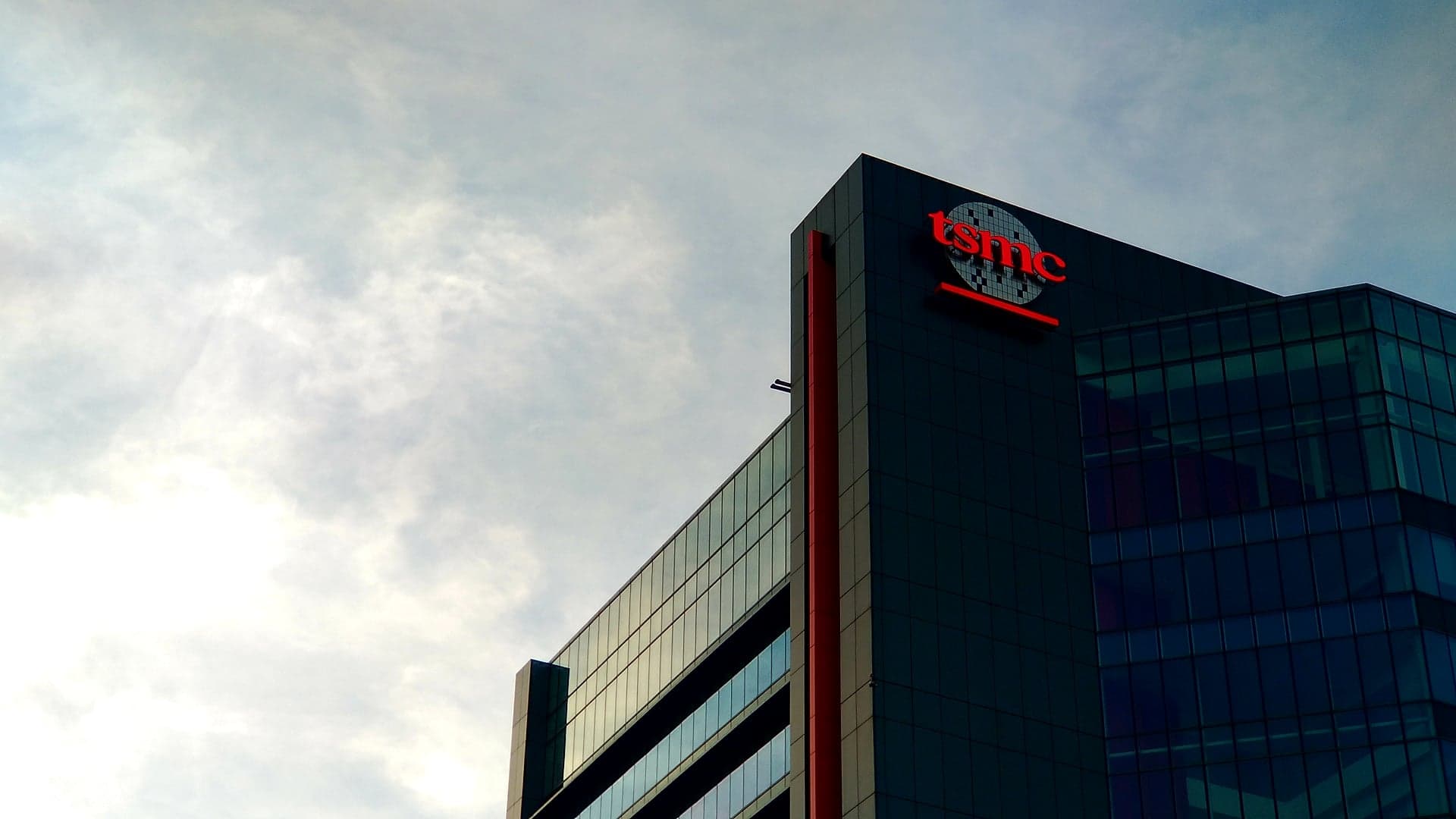
Cover: "TSMC logo on Taichung factory building.jpg" by Briáxis F. Mendes (孟必思), via Wikimedia Commons, licensed CC BY-SA 4.0. Resized and tonally adjusted; the modified version is distributed under the same licence.
In the text: "IMaGe 31089R – Silicon Wafer 20120926.jpg" by .RGB., via Wikimedia Commons, licensed CC BY 2.0. Resized and tonally adjusted.
Sources
- TSMC — "TSMC Reports Second Quarter EPS of NT$27.25", official release, July 16th 2026. pr.tsmc.com
- TSMC — "4Q25 Management Report": fourth-quarter and full-year 2025 results, January 2026. investor.tsmc.com
- Investing.com — transcript of the second-quarter 2026 conference call, July 2026. investing.com
- City of Phoenix — "TSMC Announces Additional $100 Billion Investment In Arizona", July 2026. phoenix.gov
- Taipei Times — "TSMC's market share edges higher", with the TrendForce data, September 10th 2026. taipeitimes.com
- U.S. Department of Commerce — "Fact Sheet: Restoring American Semiconductor Manufacturing Leadership Through an Agreement on Trade & Investment with Taiwan", January 2026. commerce.gov
- U.S. International Trade Commission — "U.S. Exposure to the Taiwanese Semiconductor Industry", with the Boston Consulting Group and Semiconductor Industry Association data, November 2023. usitc.gov
- IEEE Spectrum — "Morris Chang: Foundry Father". spectrum.ieee.org
- Tom's Hardware — the start of 2-nanometre production and Jensen Huang's statement of January 21st 2026. tomshardware.com
- Taiwan News — "Cabinet says most advanced TSMC technology will stay in Taiwan", July 17th 2026. taiwannews.com.tw
- semiconductors
- artificial intelligence
- Taiwan
- geopolitics
- manufacturing