In 2025 LVMH generated €17.8bn of operating profit, 50% more than in 2019, the year before the pandemic. And yet in three years it has watched its market capitalisation fall by roughly $270bn. How does the world's largest luxury group, with its accounts still solid, lose more than half its market value while continuing to make billions? In April 2023 LVMH had become the first European company in history to pass $500bn in market capitalisation. In mid-September 2026 it is worth roughly $231bn (€213bn): the answer says more about the crisis of a sector than about the failure of a company.
An empire born of a takeover, not a founding
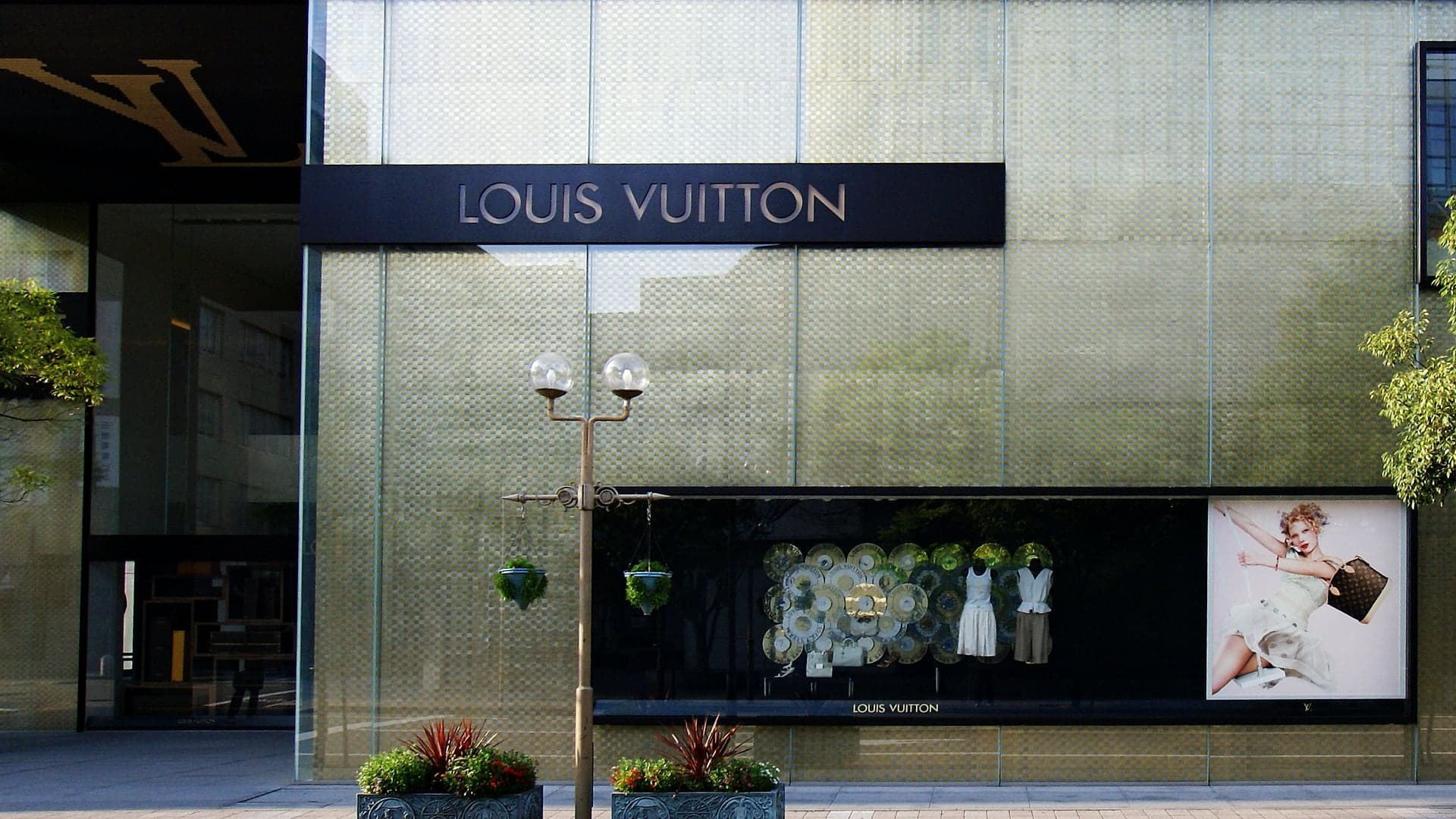
Contrary to what is often believed, Bernard Arnault did not found LVMH. The group was created on June 3rd 1987 by the merger of Louis Vuitton — the luggage house founded in 1854 — and Moët Hennessy, itself formed in 1971 by the union of the champagne maker Moët & Chandon (1743) and the cognac house Hennessy (1765). Louis Vuitton himself had begun his career as personal packer to the Empress Eugénie, wife of Napoleon III, before opening his own atelier in Paris in 1854 under the sign "securely packs the most fragile objects". In 1858 he introduced the flat rectangular canvas trunk, designed to be stacked: a revolution compared with the domed leather trunks then in use, and one that generated such demand it forced him to move production to a larger works at Asnières-sur-Seine. Leading the 1987 merger, however, were Alain Chevalier, head of Moët Hennessy, and Henry Racamier, running Louis Vuitton: two men with opposing visions of what the new company should become, who soon began fighting each other for control.
To strengthen his position against Chevalier, Racamier invited a young entrepreneur who had already made money in property and textiles to buy shares in the group as an ally: Bernard Arnault. It was a miscalculation that would cost him the company. With the help of the investment bank Lazard and an alliance with the British group Guinness, Arnault rapidly accumulated stock between 1988 and 1989 until he took control himself, at the expense both of Chevalier and of the very Racamier who had brought him in. In January 1989 he was unanimously elected chairman and chief executive, a post he still holds today, almost forty years on.
Arnault came from another takeover, more controversial still. In 1984 he had acquired Boussac Saint-Frères, a bankrupt French textile conglomerate that nonetheless owned a brand nobody wanted to let slip: Christian Dior. The price paid, according to various accounts, was symbolic — one franc, plus assumption of the group's debts — in exchange for a commitment to save French textile jobs. Arnault instead laid off roughly 9,000 people and sold most of Boussac's other assets, keeping Dior. Hence the nickname, still remembered today: "the Terminator".
What the world's largest luxury group actually owns
LVMH today controls around 75 maisons and brands organised into five main divisions. Fashion and leather goods — Louis Vuitton, Christian Dior, Fendi, Celine, Givenchy, Loro Piana — is the heaviest: €37.7bn of revenue in 2025 and a recurring operating margin of 35%, by far the highest in the group, which makes it the principal source of total operating profit. Wines and spirits brings together Moët & Chandon, Dom Pérignon and Hennessy. Perfumes and cosmetics includes the beauty lines of Dior and Guerlain. Watches and jewellery covers Bulgari — acquired in 2011 for $5.2bn — and TAG Heuer. Selective retailing, finally, runs Sephora and DFS, the chains through which the group also sells third-party brands.
The most expensive acquisition in the group's history remains the most recent and most complicated: Tiffany & Co., announced at the end of 2019 for roughly $16.2bn. The deal nearly collapsed in 2020 when LVMH tried to walk away, accusing Tiffany of mismanagement during the pandemic; only after a lawsuit did the parties settle on a slightly reduced price, and the transaction closed in January 2021.
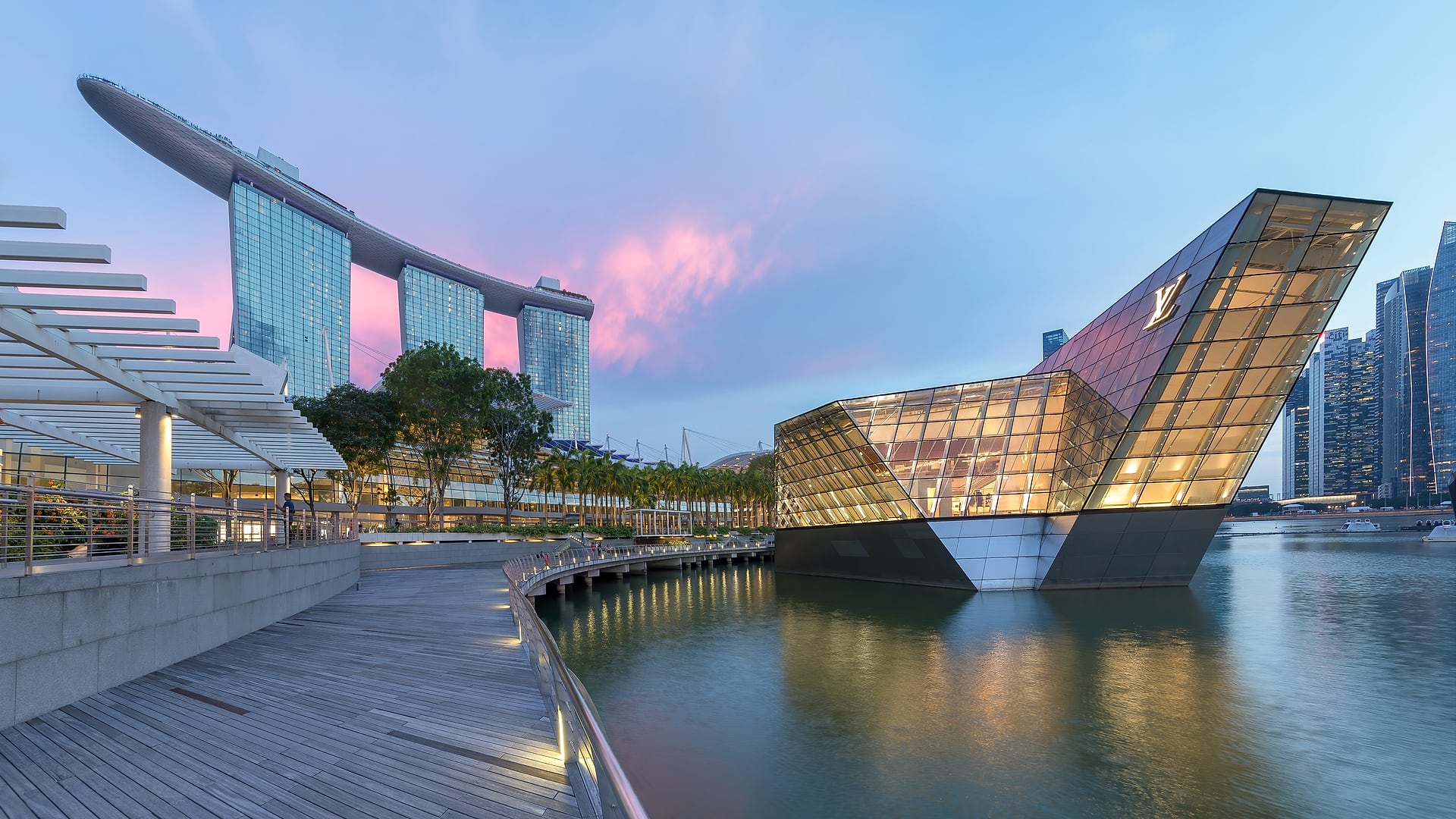
Behind the brands sits an enormous industrial machine: in 2025 LVMH employed a little over 211,000 people worldwide, down from 215,000 in 2024 — another sign of the slowdown under way.
The Arnault family, through a chain of holding companies running via Christian Dior SE (which holds roughly 42% of LVMH), today controls around 49.8% of the shares but 65.9% of the voting rights — a gap made possible by the double voting rights reserved for long-term shareholders, the same mechanism that puts any hostile takeover out of reach, including the kind Arnault himself orchestrated against his predecessors. A further layer of protection comes from the articles of the family holding company Agache: since October 2023 they forbid any sale of stakes outside the circle of the five children and their direct descendants, and they do so until 2052 — a horizon of family control that reaches well beyond any industrial plan.
2025 and 2026: when the wind turned
The warning had already come in mid-2025: in the first half the group recorded a 4% fall in sales and, more strikingly, a 22% collapse in profits, partly because of an unfavourable euro-dollar rate. 2025 then closed with reported revenue of €80.8bn, down 5%, a recurring operating margin down to 22% and net profit of €10.9bn (-13%): a slowdown in the second part of the year relative to the first half, but not a reversal. Fashion and leather goods, the heart of the group, was down 8%; wines and spirits did worse still, with operating profit down 25%. The numbers are solid in absolute terms, but the direction — after years of almost uninterrupted growth — began to worry investors more than the numbers themselves.
In the summer of 2026 the situation in China, one of the historically most important markets for Western luxury, grew more complicated still, through an almost paradoxical episode. Louis Vuitton sued the Chinese bubble tea chain Molly Tea over its logo, a four-petalled flower held to be too close to the maison's famous monogram. The court found for Louis Vuitton, ordering Molly Tea to pay damages of 10.3m yuan (about €1.3m), but Chinese consumers sided en masse with the tea chain on social media, arguing that the flower echoes traditional Chinese motifs dating back to the Tang dynasty. The backlash was swift: according to estimates from the research firm JL Warren Capital — unofficial, based on store-level monitoring — LVMH's sales in China are said to have fallen by roughly 30% in July and 20-25% in August. It does not appear to be a problem unique to the group: Gucci is reported to have lost around 20% in July and Hermès around 5%, on similar estimates. The episode nonetheless compounds a more structural phenomenon: according to Bain & Company, between 2022 and 2025 the luxury sector lost roughly 60 million consumers worldwide (from 400 million to 340 million), equal to 15% of the global customer base, largely "aspirational" buyers who bought luxury as a personal reward in the post-pandemic euphoria and who today, between inflation and a less optimistic mood, simply no longer buy.
The risks worth keeping in mind
The first is China itself: few other markets weigh as heavily on Western luxury revenue, and between the domestic economic slowdown and episodes like Molly Tea the risk of further stumbles is real and hard to forecast.
The second is governance and succession. Bernard Arnault is 77 (he turned 77 in March 2026) and has already seen the age limit for the chief executive's post raised twice: first from 75 to 80 in 2024, then from 80 to 85 in 2025 with shareholder approval. According to Fortune, even Warren Buffett is said to have written to tell him that setting the limit at 80 had been a mistake — too low. In January 2026 several large institutional investors publicly pressed Arnault to clarify a succession plan among his five children, all of whom already hold operating roles in the group: Delphine running Dior, Alexandre at Tiffany, Frédéric in watches, Jean in Louis Vuitton's watch marketing, Antoine in senior positions. Arnault replied that it could be discussed again "in ten years".
The third is competition, though it tells a more nuanced story than it seems: not all of luxury is suffering equally. Kering, Gucci's parent, is going through an even harder crisis — after Sabato De Sarno's departure, the appointment of Demna Gvasalia as creative director in March 2025 sent Kering's shares down by double digits in a single day, and Gucci's sales have kept falling. Hermès and Richemont, by contrast, have held up far better, supported by jewellery — seen by wealthier customers as a store of value even in uncertain times — with Richemont up around 28% on the market in the six months to the start of September 2026. Luxury, in short, is polarising between those who keep pricing power and those who lose it.
The fourth is tariffs: the framework agreement reached between the European Union and the United States on July 27th 2025 set a general 15% rate on European imports into the United States, but the specific treatment of luxury goods — bags, clothing, accessories — was not clearly defined in the agreement and remains a point of regulatory uncertainty; a cost the group can in any case partly pass on to final prices thanks to brand power, but not without risk.
On the market: from perceived monopoly to luxury cyclical
LVMH's share-price arc is that of a company the market has stopped treating as an unstoppable growth machine and started treating as what, at bottom, it always was: a consumer goods group exposed to economic cycles, albeit at the very top end. That same climb had made Bernard Arnault, between late 2022 and early 2023, the richest man in the world on the Forbes list, ahead of Elon Musk, precisely on the value of his LVMH shares — a title the subsequent collapse has handed back in part to his American rivals. From the peak of roughly $500bn in April 2023, the market capitalisation has fallen by more than half, to around $231bn in mid-September 2026, with a decline of about 21% in the past year alone. The paradox, as several analysts note, is that profits remain well above pre-pandemic levels: what changed was not the group's profitability, but the market's faith in growth that seemed never to have to stop.
LVMH remains, by a wide margin, the largest luxury group in the world by revenue and market value, with brands no competitor can replicate and an acquisition machine that in forty years has turned a collection of companies once in crisis or suing each other into an empire of some 75 maisons. But the group that did more than any other to build the modern global luxury market now finds itself vulnerable to something it cannot control: the mood of Chinese consumers, and the patience of its own shareholders in waiting for a clear answer on who comes after Bernard Arnault.
If the group that did more than any other to build modern global luxury struggles to protect its most iconic brands from a consumer backlash, how much is the promise of exclusivity that holds up the entire sector really worth?
This article is for information and editorial purposes. It is not investment advice: consider your own circumstances or consult a licensed adviser before making any investment decision. The financial figures reported here come from official releases by LVMH and Kering; the market shares, stock market multiples and competitive comparisons cited are in part estimates from outside sources rather than certified data. Market data is current as of mid-September 2026 and can change quickly.
Image credits
Cover: the LVMH building in Kyukyoryuchi, Kobe's former foreign settlement, in Japan. "Lvmh kobe03s5s3510.jpg" by 663highland, via Wikimedia Commons, licensed CC BY 2.5. Cropped to the sign and tonally adjusted.
In the text: the Louis Vuitton Island Maison at Marina Bay, Singapore. "Marina Bay Sands and illuminated polyhedral building Louis Vuitton over the water at blue hour with pink clouds in Singapore.jpg" by Basile Morin, via Wikimedia Commons, licensed CC BY-SA 4.0. Resized and tonally adjusted; the modified version is distributed under the same licence.
- luxury
- fashion
- China
- family companies
- Bernard Arnault