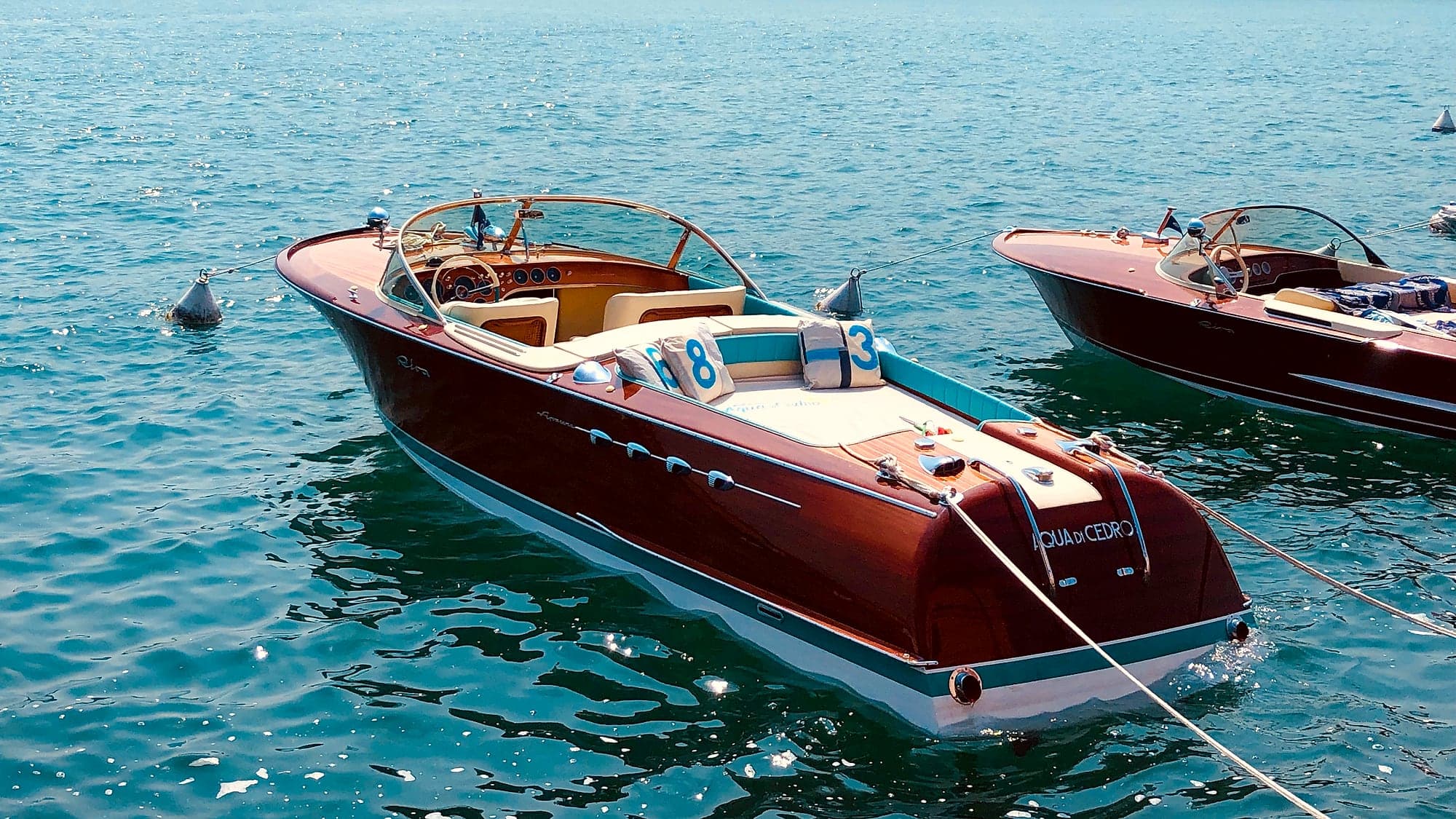
In 1842 a young shipwright from Lake Como stops in Sarnico, on Lake Iseo, to repair fishing boats wrecked by a sudden storm. His name is Pietro Riva, and he never goes home. A hundred and twenty years later, in 1962, the boatyard founded by his family unveils the Aquarama, a wooden motorboat about eight metres long that becomes a symbol of the Italian summer all over the world. Today Riva is part of Ferretti Group. The group's largest shareholder, with about 39.5%, is Weichai, a state-owned Chinese industrial giant that answers to the province of Shandong. The second largest is KKCG, the holding company of Czech billionaire Karel Komárek, which this year tried to wrest control from it and, after losing the shareholder vote, took the fight to court. Who really owns Italy's yachts?
Two brothers, a car dealership and a fishing boat
It all starts with a present. Norberto Ferretti, born in Bologna in 1946, is barely more than a boy when his father, after hearing him insist for a long time, buys him a 5.7-metre boat. Years later he will call it "the most important toy of my life". At the time, though, the family business is cars: after school, Norberto and his older brother Alessandro work at their father's dealership in Bologna, which sells Lancia, Autobianchi, Maserati and Lamborghini.
The move from cars to boats happens step by step, and it starts from what the two brothers already know how to do: sell. In 1968 Norberto decides to turn his passion into a job, and the family adds a new business alongside the dealership. The brothers win the dealership for Chris-Craft, one of the best-known American motorboat brands of the time, and open a shop in central Bologna that they call Ferretti Nautica. For a few years, then, the Ferrettis sell both cars and boats.
In 1971 they decide to try on their own. At a boatyard in Cattolica they take the wooden hull of an 11-metre fishing boat and turn it into a motor sailer, which they bring to the Genoa Boat Show under the name Ferretti Craft. For a few years the Ferrettis mostly build sailing boats. The push towards motorboats, according to accounts of the period, comes from a fellow builder: Luciano Mochi, from the Marche region, who encourages them to move away from sail. His boatyard, Mochi Craft, will later become part of the group.
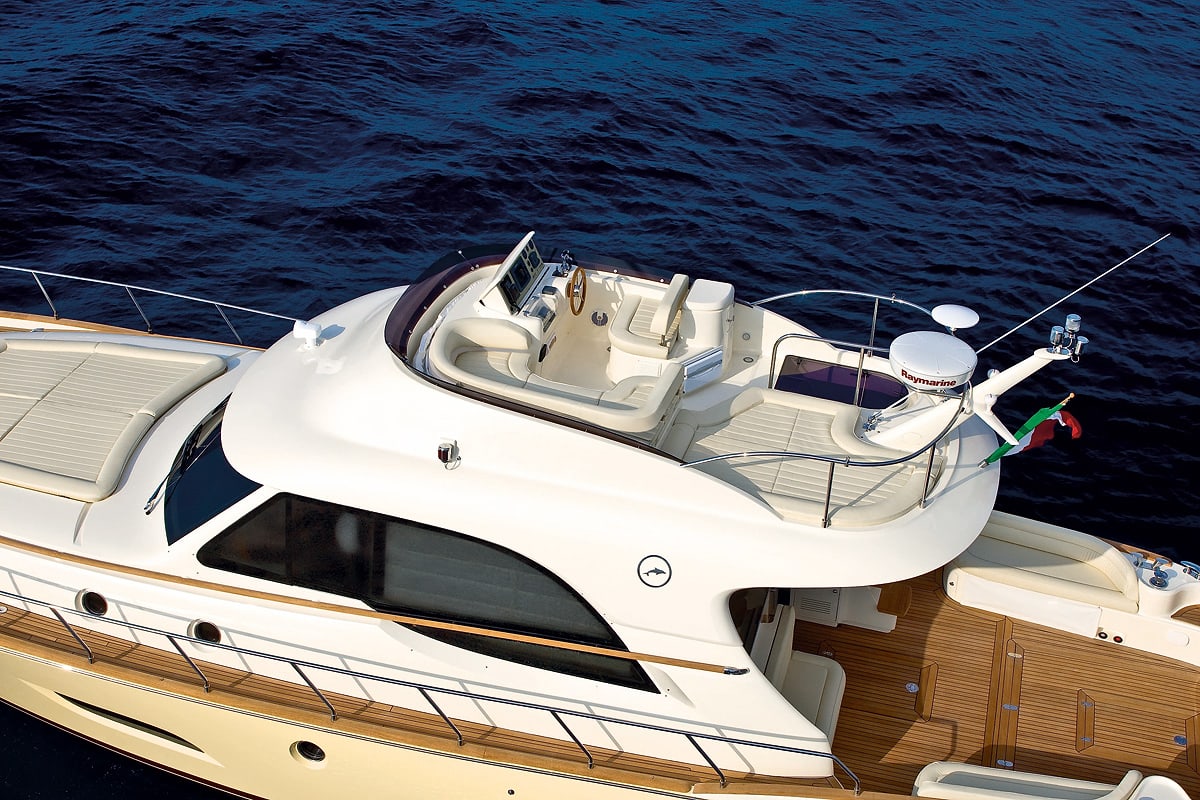 A Mochi Craft Dolphin 54 flybridge.
In 1975 the choice becomes final: the brothers leave cars behind, devote themselves entirely to boats and open a yard in San Giovanni in Marignano, on the coast of Romagna. In 1982 they present their first pure motorboat, and that is the turning point: from then on Ferretti is a motor yacht brand. In 1987 comes the yard in Forlì, which becomes the group's headquarters.
Norberto also brings his passion for racing into the company. In the 1990s Ferretti enters offshore powerboat racing, and in 1994 he himself wins the world title in Class 1, the fastest category; the team does it again in 1997.
Buying other people's brands
Real growth, though, comes through acquisitions. In the mid-1990s Alessandro dies, and Norberto is left to run the company alone. In 1996 Custom Line is born, the line of larger yachts. In 1998 Ferretti buys Pershing, the Marche-based builder of sports yachts, and in 1999 CRN of Ancona, which specialises in pleasure vessels over 30 metres. In 2000 comes the biggest coup: Riva. And here the story takes a curious turn. In the 1950s Carlo Riva, heir to the Sarnico family, had drawn inspiration from Chris-Craft's mahogany motorboats, the very brand the Ferretti brothers would start out with. From that school came the Aquarama, named after Cinerama, the fashionable widescreen cinema of the time, echoed in its curved windscreen. Just under 800 were built between 1962 and 1996, and their owners included Brigitte Bardot, Sophia Loren and Peter Sellers. Ferruccio Lamborghini had one built with two of his company's V12 engines: the fastest Aquarama ever made.
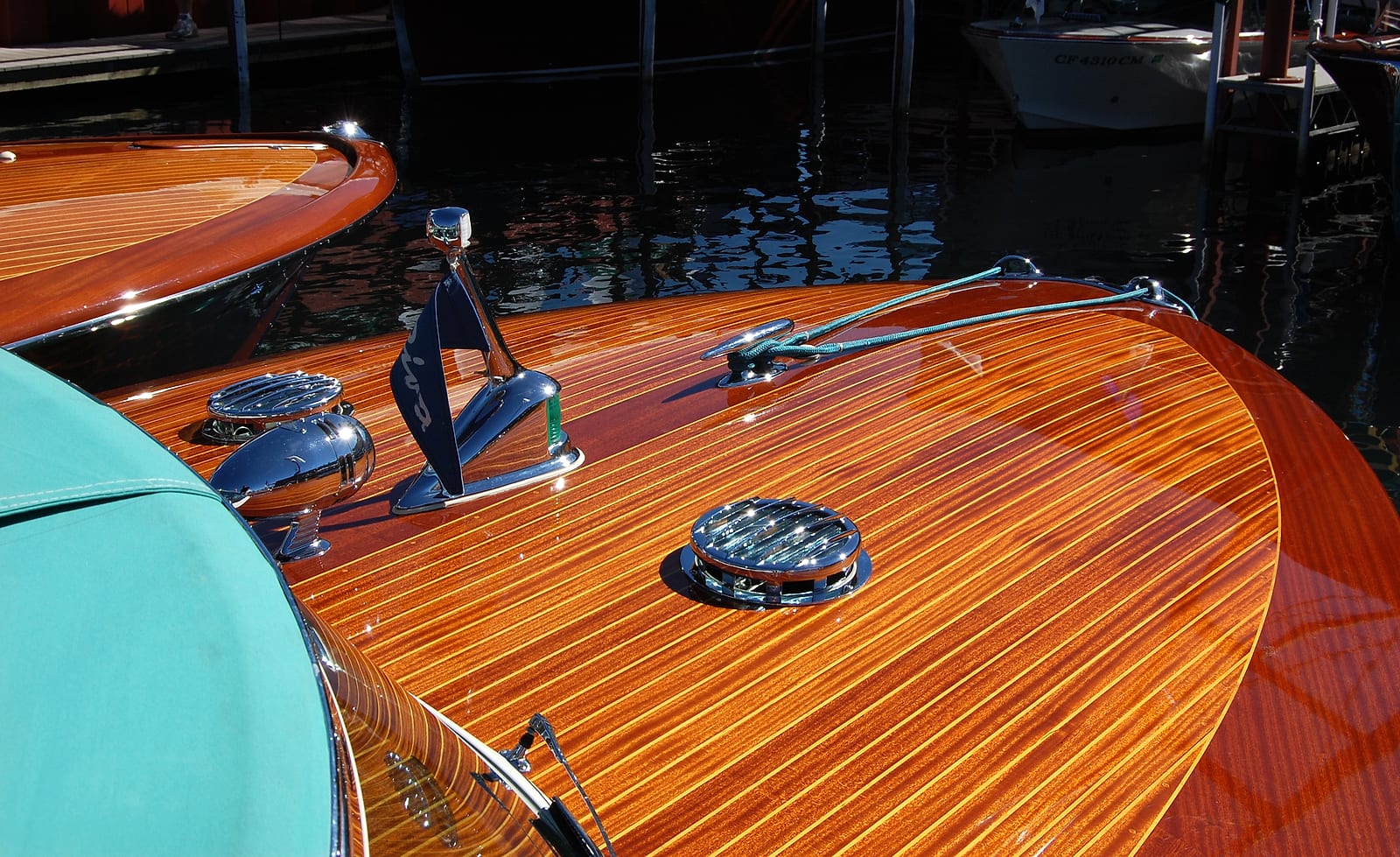 The mahogany bow of a Riva Tritone, another classic motorboat from the Sarnico yard, at the Lake Tahoe Concours d'Elegance, in the United States, in August 2011.
In 1969 Carlo Riva had sold the yard to an American group, and since then Riva had remained in foreign hands. With Ferretti, in 2000, the brand returned to Italian ownership after thirty years. That same year the group listed on the Milan stock exchange, and in the following years it also bought Mochi Craft and Itama.
From 1.7 billion to zero
This is where the story changes tone. In 2003 Ferretti leaves the stock market and passes into the hands of investment funds. The decisive step comes in 2006: the British fund Candover buys a majority of the group, valuing it at about 1.7 billion euros. To pay for it, it mostly uses money borrowed from banks, and that debt ends up on Ferretti's shoulders. Norberto stays on as a shareholder, with 40% together with management.
Then comes the 2008 financial crisis. Sales of luxury boats collapse and, with revenue falling, Ferretti can no longer meet its covenants: the conditions a company commits to when it takes out a loan, such as not exceeding a certain ratio of debt to earnings. In early 2009 the group calls in Rothschild, one of the oldest investment banks in Europe, to negotiate with creditors. New capital is needed, and Candover pulls out: it puts in no more money and declares that its stake "no longer has any value". In April a deal is reached: the banks write off 550 million euros of loans, about half the debt, and Ferretti is left in the hands of Norberto and the creditors themselves. In little more than two years, a stake bought at a premium had become worthless.
The solution comes from far away. In January 2012 Shandong Heavy Industry Group, an industrial group controlled by the Chinese province of Shandong, takes 75% of Ferretti through its subsidiary Weichai as part of the debt restructuring. The total investment is 374 million euros: 178 million in equity and 196 million in new credit lines. In 2016 Piero Ferrari, Enzo's son, buys 13.2% of the holding company through which Weichai controls Ferretti.
The Galassi era and the return to the stock market
In 2014 Alberto Galassi becomes chief executive. A lawyer, he comes from the chairmanship of Piaggio Aero and also sits on the board of Manchester City. He will run Ferretti for twelve years. According to Milano Finanza, under his leadership revenue grows from 335 million euros in 2013 to more than 1.17 billion in 2024.
The return to the stock market is more complicated than expected: in 2019 Ferretti abandons a Milan listing because investors offer too little, in March 2022 it lists in Hong Kong, and only on 27 June 2023 does it return to Piazza Affari, at 3 euros a share, with a market value of about one billion. The seller is Weichai, which drops below 40%. Among the main buyers are entrepreneur Danilo Iervolino and a name that will become important: Karel Komárek, the Czech billionaire behind KKCG.
How Ferretti Group makes money: brands and revenue
Today Ferretti brings together seven brands: Ferretti Yachts, Riva, Pershing, Itama, Wally, Custom Line and CRN. The group designs and builds yachts in its Italian yards and sells them around the world, directly or through dealers. Each boat is ordered and paid for in instalments during construction, so a year's revenue depends largely on orders collected in previous years.
The accounts split the business into three blocks. Series-built fibreglass yachts, the composite segment, are boats under 30 metres, the most numerous. Made to measure yachts, between 30 and 43 metres, start from standard platforms but are customised for the client. Finally, super yachts are pleasure vessels over 43 metres, custom-built in steel and aluminium: in September 2026 the group unveiled the Riva 54Metri at the Monaco Yacht Show, the largest boat ever built under that brand.
2025 was a solid year: revenue from new boats of 1.23 billion euros (+5%), adjusted EBITDA, that is, stripped of one-off items, of 203 million, or 16.5% of revenue, and net profit of 90 million. But inside those numbers there is an important shift. Series-built boats fell 11%, while made to measure grew 18% and super yachts 28%. And the fastest-growing market was the Middle East: together with Africa it accounted for 372 million, 30% of new-boat revenue, up from 269 million the year before.
Ferretti and the Chinese: the clash between Weichai and KKCG
The relationship between Weichai and management, led by Galassi, soured over the years, but the real clash broke out in 2026. In January Karel Komárek, whose KKCG holds 14.5% of Ferretti, launches an offer to buy more shares and gain more weight on the board. Weichai does not sell; it actually increases its stake, and KKCG stops at 23.25%.
The showdown is the shareholder meeting of 14 May, and Weichai wins it: eight of the nine directors are its picks, the new chief executive is Stassi Anastassov, a manager who held senior roles at Procter & Gamble and Duracell, and Galassi leaves after twelve years. KKCG does not accept the result and takes Ferretti to court in Bologna. Its argument is that Weichai should have declared its position to the government under the golden power, the law that oversees who controls companies considered strategic: Ferretti, in fact, once had a division set up to build patrol boats. As of early October there was still no public decision from the judge.
Go deeper: the battle for control, step by step
The conflict between Weichai and management had been simmering for a long time. According to Bloomberg, in April 2024 listening devices were found hidden in the office of a Weichai-appointed executive, and Milan prosecutors opened an investigation, with Ferretti declaring itself the injured party. In October 2025 Weichai accused chief executive Alberto Galassi of keeping its Chinese representatives out of decisions.
On 19 January 2026 Komárek enters the scene. His KKCG, which holds 14.5%, announces a partial tender offer at 3.50 euros a share to rise to as much as 29.9%, just below the 30% threshold above which it would be required to bid for the whole company. The stated goal is more weight on the board. The acceptance period opens on 16 March and closes on 13 April; at the end of March KKCG raises its offer to 3.90 euros, its final price. Weichai does not sell and in fact climbs to about 39.5%. At the close KKCG reaches 23.25%.
The showdown is the shareholder meeting of 14 May. Weichai's slate wins 52.3% of the votes cast against 47.4% for KKCG: eight of the nine directors are nominated by the Chinese shareholder and Tan Ning becomes chairman. The next day the new board appoints Stassi Anastassov as chief executive, and Galassi leaves after twelve years. The evening before the meeting, Piero Ferrari and director Stefano Domenicali had resigned.
KKCG does not give up. On 9 June Azúr, the company through which KKCG holds its stake, takes Ferretti before the Court of Bologna, asking it to annul the appointment of the board. The main argument is the golden power, the law that lets the Italian government block or set conditions on who controls companies considered strategic. In 2016 Ferretti set up a division, Ferretti Security & Defence, to build patrol boats for police forces and coast guards. According to KKCG, this business brings Ferretti under the golden power: Weichai should have notified Palazzo Chigi of its position and its votes should be suspended. That is the argument the court has to assess.
Anastassov maintains that the division was closed in May 2024; according to Formiche, it still appears among the group's activities in the 2025 financial documents, with 5.1 million euros of revenue, but it remains to be seen whether that is enough to make it relevant for the golden power. Ferretti says it has never received any objection from the authorities. After the hearing on 23 July the judge reserved judgment, and at the time of writing no public ruling has been reported.
Ferretti shares: falling orders and a one-year low
While the shareholders fight, the market is slowing. In the first half of 2026 revenue from new boats fell 5.6% to 585.6 million euros, and net profit fell 13% to 37.9 million. The most worrying figure, though, is orders: 341 million against 467 a year earlier, down 27%. Orders from the Middle East and the Americas fell most, and no new super yacht orders came in. According to Anastassov, tensions in the Middle East are delaying signatures.
On 31 July the group cut its guidance for the year: revenue between 1.20 and 1.24 billion and adjusted EBITDA between 186 and 197 million. One strength remains: at the end of June Ferretti had 95 million euros of net cash, meaning more cash than debt, after paying 37 million in dividends.
In the first part of 2026 the fight between KKCG and Weichai pushed the stock higher, because a battle for control raises hopes of higher bids. After the shareholder meeting, with Weichai firmly in charge, that hope faded, and the half-year results did the rest: on the day they came out the stock lost more than 4%.
On Friday 2 October Ferretti closed on Piazza Affari at 2.61 euros, its lowest price in a year, for a market value of about 880 million. According to Borsa Italiana that is 36% less than six months earlier.
Source: Yahoo Finance, weekly closing prices. Data as of 2 October 2026.
The risks to keep in mind
The first is governance. With a Chinese largest shareholder controlling the board, a second shareholder challenging it in court and a government watching the golden power file, Ferretti's future set-up depends on decisions that are not in the company's hands. It is the opposite of other listed Italian companies such as Amplifon, where the founding family keeps a firm majority of the votes.
The second is concentration. The group has grown by moving towards ever bigger boats and ever richer clients, with the Middle East now at 30% of new-boat revenue. It is a choice that lifts margins when things go well, but makes the accounts more fragile when a few big clients put off signing, as is happening in 2026.
The third is the cycle. Yachts are the most postponable purchase there is: nobody needs one. It is the same slowdown that has hit the whole luxury sector since 2025, including its largest group, LVMH. The balance sheet is much stronger today, but a net order backlog down to 565 million, a quarter less than a year earlier, says that revenue in the coming quarters will be hard to grow.
In fifty years Ferretti has gone from a fishing boat converted in Cattolica to seven of the most famous names in boating, surviving a crisis that had left it worth nothing to its own owners. Today the boats keep coming out of Italian yards, but the game over who will decide their future is being played between Beijing, Prague and a courtroom in Bologna. Is today's low price an opportunity, or the bill for the war between shareholders?
Ferretti Group: frequently asked questions
Who owns Ferretti Group? The largest shareholder is Weichai, a state-owned Chinese industrial group that answers to the province of Shandong, with about 39.5%. The second largest is KKCG, the holding company of Czech billionaire Karel Komárek, with 23.25%.
Who is the CEO of Ferretti? Since 15 May 2026 it has been Stassi Anastassov, a manager who held senior roles at Procter & Gamble and Duracell. Before him the group was run for twelve years by Alberto Galassi.
What is Ferretti's revenue? In 2025 revenue from new boats was 1.23 billion euros, with net profit of 90 million. For 2026 the group expects revenue between 1.20 and 1.24 billion.
Does Ferretti pay dividends? Yes: in the first half of 2026 it paid out 37 million euros in dividends.
The information in this article does not constitute financial advice: before making any investment decision, assess your personal situation or consult a licensed adviser. The market data cited is as of 2 October 2026 and can change quickly.
Image credits
- Cover: "Riva Aquarama.jpg" by StuivertjeWisselen, via Wikimedia Commons, licensed CC BY-SA 4.0. Cropped at the top (removing the sky and the lake shore), contrast and colours enhanced, resized.
- In the text: "Yacht Mochi Craft Dolphin 54 flybridge.jpg" by Mochi Craft, via Wikimedia Commons, licensed CC BY-SA 3.0. Slightly sharpened.
- In the text: "Aquarama Bow.JPG" by Spartan7W, via Wikimedia Commons, licensed CC BY-SA 3.0. According to the author's description the boat is a Riva Tritone, not an Aquarama as the file name says. Cropped at the top, slightly brightened and resized.
Sources
- Ferretti Group — press releases on the entry of SHIG-Weichai (January 2012), on Azúr's lawsuit (11 June 2026), and on the 2025 and first-half 2026 results (31 July 2026), as reported by Teleborsa, Superyacht24 and Superyacht Guide.
- KKCG Maritime — press release "KKCG Maritime to launch a voluntary partial tender offer for Ferretti S.p.A." (19 January 2026).
- Milano Finanza — "Ferretti, la contesa per il cda tra Komárek e Weichai fa volare il titolo" (24 January 2026) and "Ferretti, Kkcg Maritime fa ricorso al Tribunale" (10 June 2026).
- Il Sole 24 Ore — on the shareholder meeting of 14 May 2026; Pressmare, on the raised offer at 3.90 euros (27 March 2026) and on the hearing of 23 July 2026.
- Megayacht News — interview with Stassi Anastassov on the golden power (June 2026); Formiche, on the Security & Defence division (8 July 2026).
- Bloomberg via gCaptain — "Yacht Builder To The World's Super-Rich Caught Up In Spy Claims" (June 2025).
- Unquote — "Candover writes off Ferretti investment" (2009); BNN Bloomberg, on the Hong Kong IPO (25 March 2022); Euronext and Forbes Italia, on the Milan listing (June 2023).
- Borsa Italiana — Ferretti stock page (price as of 2 October 2026).
- Ferretti Yachts — "Ferretti, 40 years as a leader"; official biography of Norberto Ferretti (2024); Encyclopedia.com, "Ferretti Group SpA".
- Riva — official "History" page; Wikipedia, entries "Ferretti Group" and "Riva Aquarama"; Motor Boat & Yachting, on the Aquarama and the Aquarama Lamborghini; Petrolicious, "Remembering Carlo Riva" (2017).
- yachts
- Riva
- Weichai
- KKCG
- golden power
- Milan stock exchange