In March 1998 BMG, the music arm of the German group Bertelsmann, sells its video game division to a small New York company. Inside is a game released only a few months earlier: Grand Theft Auto. One of BMG's bosses, Strauss Zelnick, is against it, but the decision is not his. Nine years later he will become chairman of the very company that bought it.
On 19 November GTA VI comes out, the most anticipated video game in years, and in Italy plenty of people search Google for "Rockstar Games shares". They don't find any, because they don't exist.
So who owns GTA?
"Thomas Middelhoff, who was then running Bertelsmann, forced us to sell BMG Interactive, over my loud objections. I couldn't have protested more, but in the end I had a boss."
Strauss Zelnick, to Music Business Worldwide (2019)
The origins: a game born from a bug
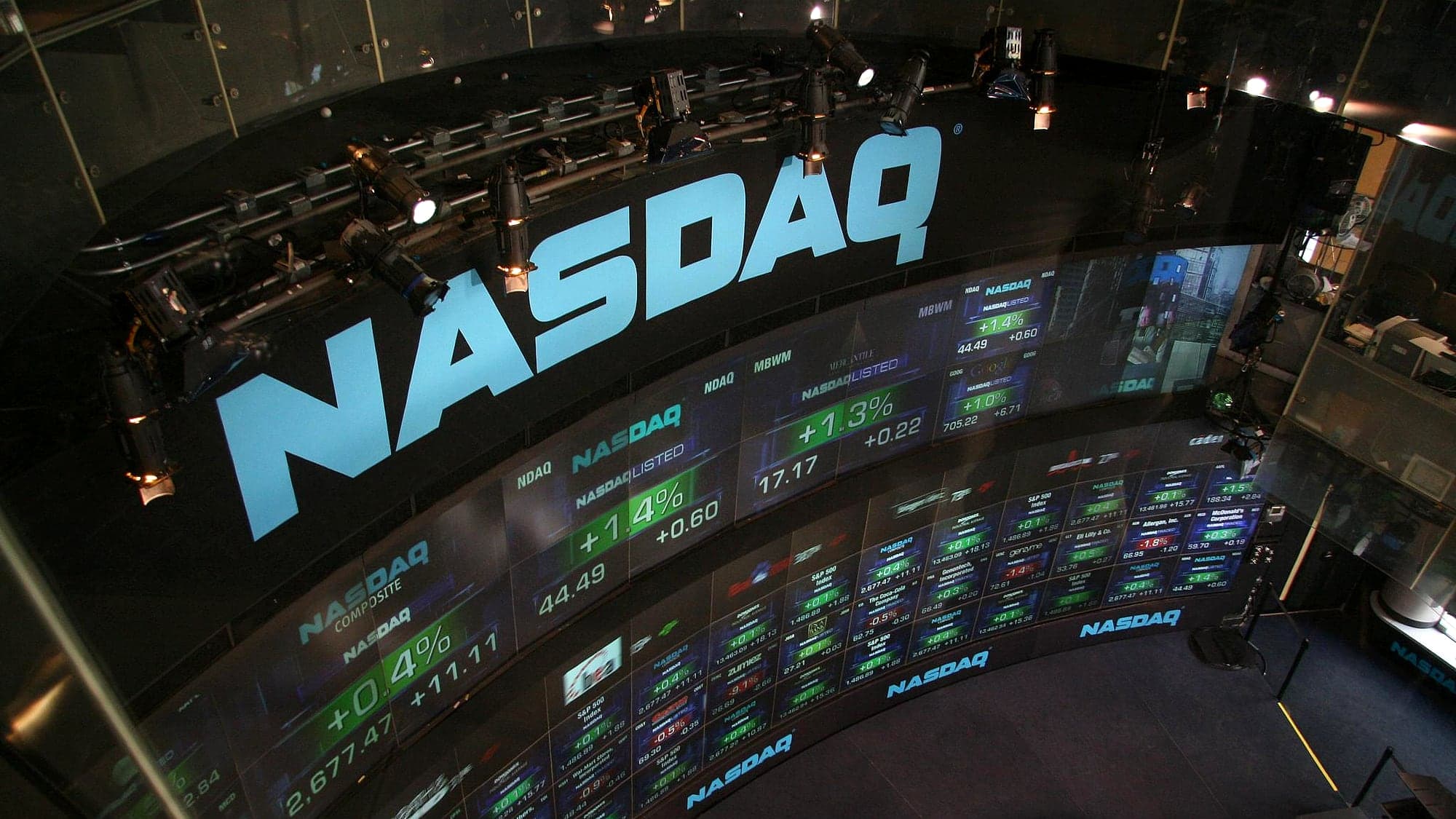
Take-Two is founded in New York in September 1993. Its founder is Ryan Brant, barely in his twenties, son of the businessman Peter Brant, co-owner of Interview, the magazine founded by Andy Warhol. Take-Two publishes and distributes video games, and grows mainly by buying other companies. In April 1997 it lists on the Nasdaq, one of America's main stock exchanges, under the ticker TTWO, the same one it uses today.
In the same years, in Dundee, Scotland, there is a development studio called DMA Design, already known for a hit game, Lemmings. Since 1995 it has been working on a car chase game, Race'n'Chase, in which players are on the side of the police. The project isn't working. "It was terrible," Gary Penn, then the studio's creative director, told Game Informer years later: the game had almost been cancelled. Then one day something changes. "I think it was a bug: the police suddenly went crazy and aggressive. And everyone said: hey, this is actually fun." From there the game switches perspective: the player no longer chases the criminal, the player is the criminal. Grand Theft Auto is born.
The game's publisher is BMG Interactive, BMG's video game division. The launch is built on scandal, and Max Clifford is brought in, a British publicist famous for tabloid scoops. "He engineered all the outrage," Mike Dailly, one of DMA's programmers, has said, as reported by PC Gamer. The outrage reaches Parliament. On 20 May 1997, six months before release, Lord Campbell of Croy asks the House of Lords whether the government intends to act on "a new computer game entitled Grand Theft Auto". GTA comes out at the end of November 1997.
Working at BMG Interactive is a young man, Sam Houser. He joined the BMG group in 1990 in the mailroom, and in 1996 became head of game development.
In March 1998 BMG sells its BMG Interactive division to Take-Two. Along with the division, the rights to publish GTA pass to Take-Two too. Take-Two doesn't pay in cash but in Take-Two shares, and those shares go to the parent company: BMG receives about 16% of Take-Two, becoming a shareholder.
Sam Houser moves to New York with his brother Dan. In December the two of them, together with three other people, found Rockstar Games: Take-Two's label dedicated to games like GTA.
One piece is still missing, though. In video games, as in music, whoever creates the product and whoever publishes it are often two different companies. Rockstar Games publishes GTA, but it was developed by DMA Design, the Scottish studio where the game was born. And DMA Design was not part of the 1998 sale. Take-Two buys it a year and a half later, in September 1999, from the French group Infogrames. The price is symbolic: one pound. In return, though, Take-Two takes on about 11.9 million dollars of debt.
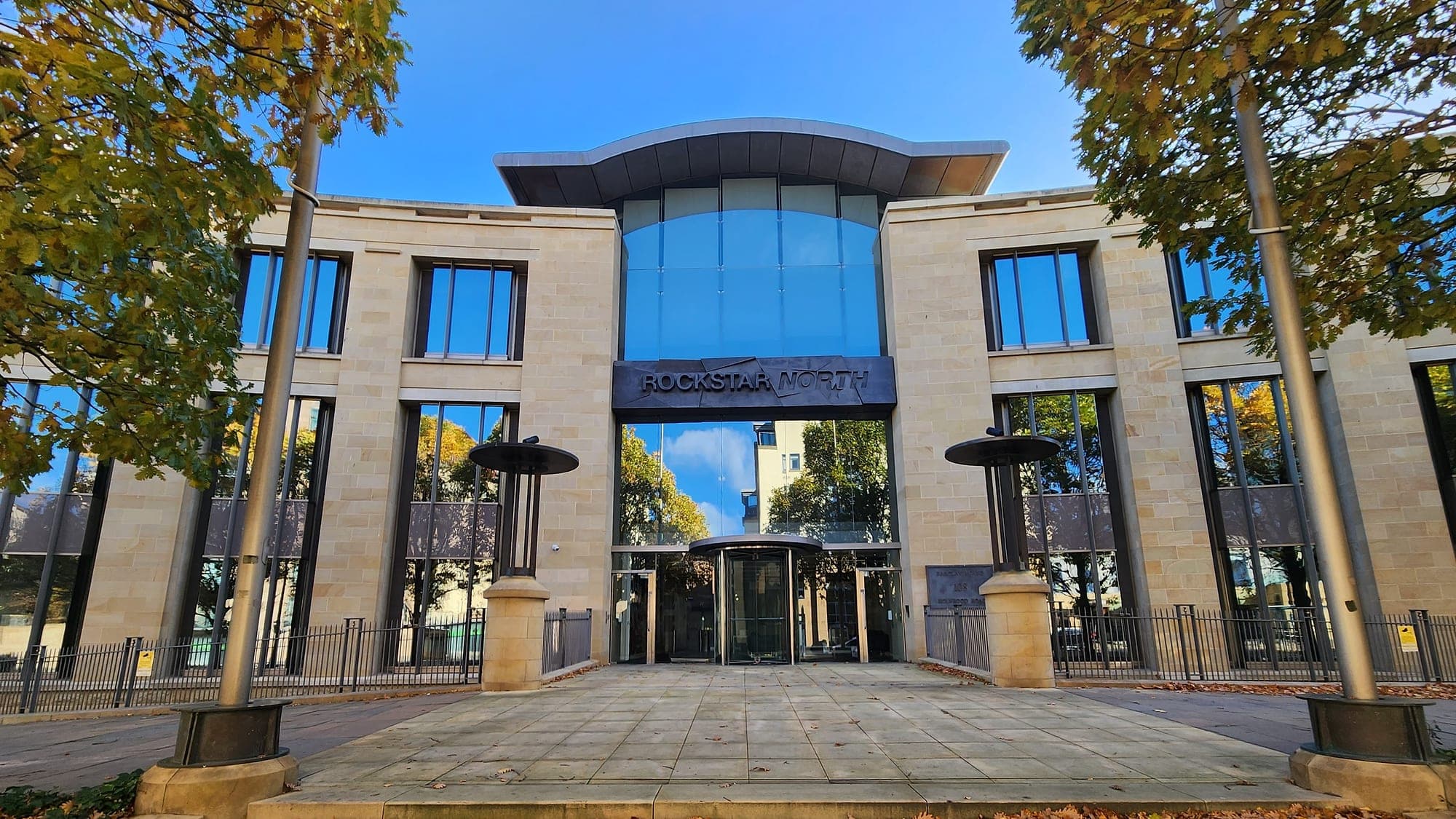
With the team complete, publisher in New York and studio in Scotland, GTA III comes out in 2001. For the first time in the series the city is three-dimensional and can be explored freely: a model the industry would copy for a long time. The following year the Scottish studio changes its name to Rockstar North, based in Edinburgh.
Scandals, a boardroom coup and a rejected offer
Success does not shield Take-Two from trouble, and much of it comes from within. The first, in 2005, is called "Hot Coffee". Hidden in the code of GTA San Andreas was a sexual minigame, which some players manage to unlock by modifying the game. In the United States the body that rates video games changes the label: from "17 and over" to "adults only". The big retail chains pull the game from their shelves, and Take-Two ends up with 24.5 million dollars in costs for returns.
Then it's the founder's turn. Ryan Brant leaves the company in October 2006. In February 2007 he pleads guilty, before the New York prosecutor, to falsifying business records. For years he had backdated stock options, the rights to buy shares at a set price: he picked, after the fact, the dates when the share price had been lowest, to make those rights more valuable. With the SEC, the US stock market regulator, he settles by paying more than 6 million dollars and accepting a permanent ban from serving as a director of a listed company.
A few weeks later, in March 2007, a group of funds that together own almost half the shares throws out the board. The new chairman is Strauss Zelnick, the same manager who nine years earlier had opposed the sale of BMG Interactive. Since 2011 he has also been chief executive, and he still is today.
Less than a year later comes proof of what that catalogue is worth. In February 2008 Electronic Arts, one of the biggest video game publishers in the world, tries to buy Take-Two. A first offer of 25 dollars a share is rejected. EA goes public with a second one of 26 dollars in cash: about 2 billion dollars in all, 64% above the share price a few days earlier. The board led by Zelnick says no again. In April GTA IV comes out, and in September EA walks away. Today Take-Two is worth almost twenty times that offer on the stock market.
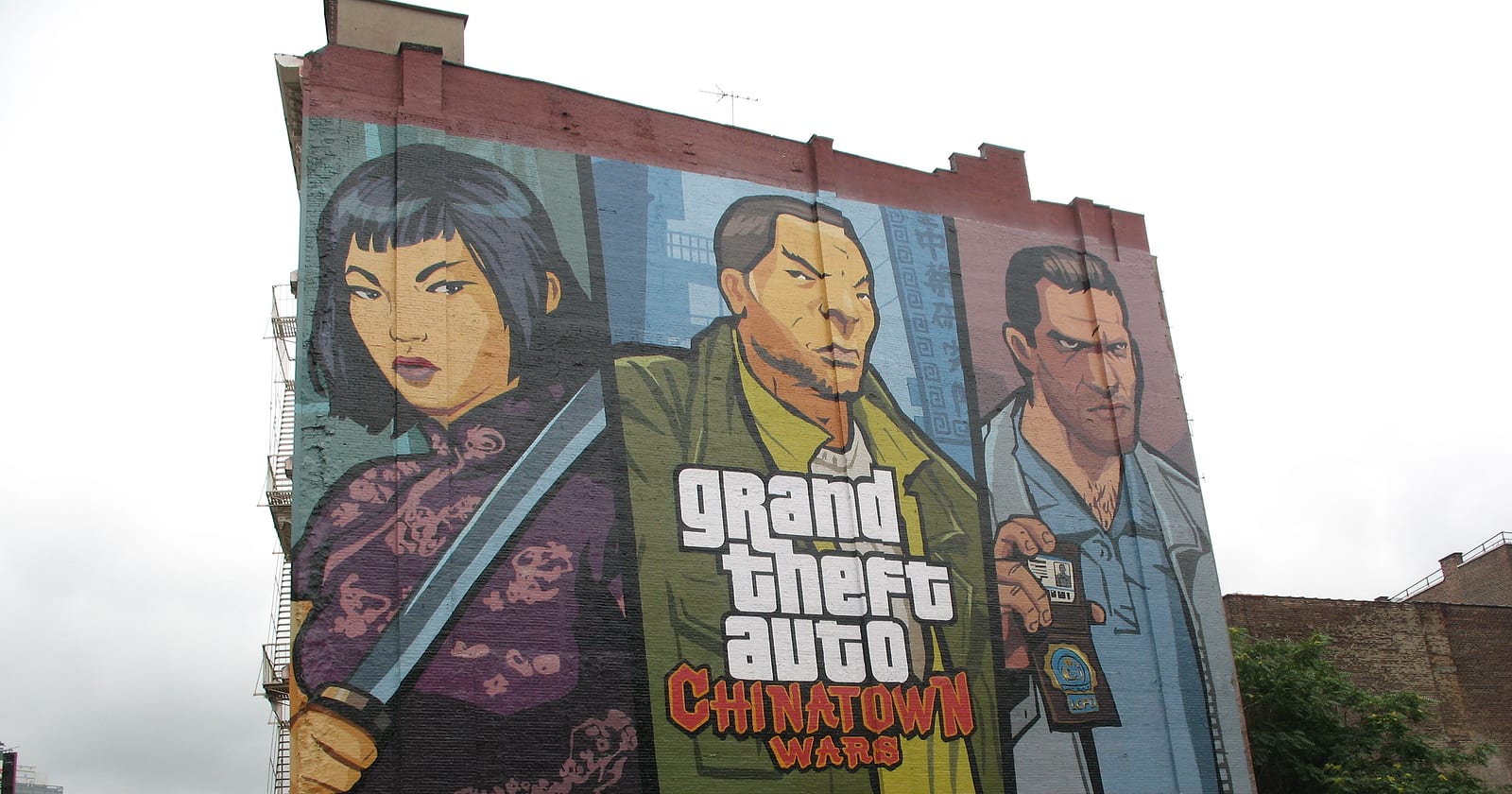 The mural advertising GTA Chinatown Wars on the side of a building in New York's Chinatown, in August 2009.
What Take-Two does today
Today Take-Two publishes its games through three labels, and Rockstar is only one of them. Until 2024 there was a fourth, Private Division, devoted to games by independent studios, which Take-Two sold at the end of 2024. That is why Rockstar Games shares don't exist: Rockstar is wholly owned by Take-Two. The only listed stock directly linked to GTA is Take-Two's, which however contains everything else too.
Rockstar Games makes few games, years apart, but huge ones. GTA V came out in September 2013 and took in more than 1 billion dollars in its first three days. In August 2026 Take-Two reported more than 230 million copies sold, and calls it the best-selling game of the past decade. Red Dead Redemption 2, a western released in 2018, has passed 85 million copies. Alongside GTA V there is GTA Online, the mode for playing online with other people, which since 2013 has kept selling content and virtual currency.
2K is the label for sports games and several long-running series. There is NBA 2K, the basketball game released every year: the NBA 2K26 edition has passed 12 million copies. Then there are Civilization, Borderlands and Mafia, whose latest chapter, Mafia: The Old Country, released in August 2025, is set in early twentieth-century Sicily.
Zynga, finally, is the least known part, but not the smallest. It is the company behind FarmVille, bought in 2022 for 12.7 billion dollars: the biggest acquisition in Take-Two's history. Zynga brought smartphone games, such as Toon Blast and Words With Friends. Take-Two closes its books at the end of March, so its fiscal year 2026 runs from April 2025 to March 2026: in those twelve months mobile, meaning all the group's smartphone games and not just Zynga's, generated 50.1% of net revenue.
The surprising figure, though, is another one. In the annual report filed with the SEC, Take-Two writes that in fiscal 2026 Grand Theft Auto games generated 12.4% of net revenue. Between one GTA and the next, in other words, Take-Two is largely a smartphone and sports games company. GTA VI is set to change that balance, at least for a while: for fiscal 2027 Take-Two estimates that 37% of sales will come from Rockstar, 34% from Zynga and 29% from 2K.
How it makes money
Take-Two makes money in two ways. The first is the most intuitive: it sells games. The second is the one that weighs most today: what players keep spending after the purchase, meaning virtual currency, extra content and advertising inside free smartphone games. Take-Two calls it recurrent consumer spending.
To measure sales, Take-Two looks above all at net bookings. They are the value of everything it sells in a period, even if part of it will only be booked as revenue later: for example content that a player pays for today but will use in the following months. In fiscal 2026 net bookings were 6.72 billion dollars, 19% more than the year before. Recurrent consumer spending made up 78% of net bookings. The accounts, however, are still in the red: the net loss was 298 million dollars.
Fiscal 2027, which will close in March 2027, is the year GTA VI launches. Take-Two expects net bookings of between 8 and 8.2 billion dollars, about 20% more, and a return to net profit, of between 104 and 143 million dollars. Recurrent consumer spending should stay flat in dollars but fall to 64% of net bookings, because for once copies sold at full price will weigh more. Finally, the company expects to end the year with more cash than debt.
GTA VI, the launch of the year
 The GTA VI logo. The game comes out on 19 November 2026 for PlayStation 5 and Xbox Series X|S.
The second GTA VI trailer came out on 6 May 2025 and, according to Rockstar, was watched more than 475 million times in 24 hours. The game is set in Leonida, an imaginary state inspired by Florida, centred on Vice City. The protagonists are a couple: Lucia Caminos and Jason Duval.
The road to launch has not been straight. At first release was planned for autumn 2025. In May 2025 it slipped to 26 May 2026. In November 2025 it was delayed again, to 19 November 2026. Since then Zelnick has repeated several times that this date is final.
Pre-orders opened on 25 June 2026: 79.99 dollars for the standard edition and 99.99 for the Ultimate edition, for PlayStation 5 and Xbox Series X|S. Rockstar has not announced a PC version.
On 27 August Take-Two presented the game with a 27-minute video, shown first on Netflix and only six hours later on YouTube: an operation Netflix itself described as the first of its kind. In its first four days the video drew 31.1 million views and reached number one in Netflix's chart in 87 of the 93 countries tracked. In August Zelnick told analysts that pre-orders were at unprecedented levels, while pointing out that they will not necessarily all turn into sales.
The stock
Take-Two is listed on the Nasdaq under the ticker TTWO. On 30 September 2026 it had a market value of almost 39 billion dollars. The stock was about 22% below its high of the past year, 266 dollars a share.
It may seem odd: seven weeks before the most anticipated launch in its history, the stock is far from its highs. One example is 31 August, when it lost 6.67% in a single session. Three things came together that day: new footage of the game leaked online, a Forbes article suggesting, with no official confirmation, that GTA VI's online mode might arrive one or two years after the game, and a market nervous about interest rates and inflation.
Analysts remain largely positive. According to StockAnalysis, their average price target, the value they expect for the stock over the coming months, is about 286 dollars, across 29 analysts.
Source: Yahoo Finance, weekly closing prices. Data as of 1 October 2026.
The doubts to keep in mind
The first is expectations. The market expects a huge success, and the growth forecast for fiscal 2027 rests almost entirely on the 19 November launch. A single rumour, as August showed, is enough to move the stock by several points.
The second is online. GTA V still sells, thirteen years after release, and owes much of that to GTA Online. For GTA VI, though, Rockstar so far only talks about the single-player part, and in May Zelnick said it would be "premature" to talk about an online version. Anyone counting on recurring revenue from GTA VI is counting, for now, on something that has not yet been announced.
The third is the rest of the group. Smartphone games account for about half of revenue, but for fiscal 2027 Take-Two itself expects them to decline, because older games are slowing down. And even with more than 8 billion dollars of net bookings, the expected profit remains thin: less than 150 million.
The fourth is about people. In October 2025 Rockstar fired more than thirty employees. According to the company they had leaked confidential information; according to the British union IWGB they were targeted for their union activity. In December the British prime minister Keir Starmer called the affair, in Parliament, "a deeply concerning case", and promised the government would look into it. For a company that lives on the talent of its studios, the internal climate is a risk not to be underestimated.
In 1998 Bertelsmann gave up GTA in exchange for a stake in a small New York company, against the advice of the man who now runs that very company. In 2008 Take-Two turned down 2 billion dollars; today it is worth almost twenty times as much. And in seven weeks it puts on the market the game that, more than any other, will decide its year. Is GTA VI's success already in the price, or is it still to come?
The information contained here does not constitute financial advice: before making any investment decision, consider your own personal situation or consult a qualified adviser. The market data cited are as of 30 September 2026 and may change quickly.
Image credits
- Cover: "20231022 Rockstar North.jpg" by Discott, via Wikimedia Commons, licensed under CC0. Cropped and resized.
- In the text: "Grand Theft Auto, NY Chinatown.jpg" by Gary Stevens, via Wikimedia Commons, licensed under CC BY 2.0. Cropped at the bottom to remove the vans and the billboard, and resized.
- In the text: "Grand Theft Auto VI logo (with gradient).svg", via Wikimedia Commons, public domain; the logo is a registered trademark of Take-Two Interactive. Converted to an image on a white background.
Sources
- Take-Two Interactive — "Reports Results for Fourth Quarter and Fiscal Year 2026" (21 May 2026) and "Reports Results for Fiscal First Quarter 2027" (6 August 2026), with the transcripts of the analyst conference calls; Form 10-K for the fiscal year ended 31 March 2026, filed with the SEC.
- Take-Two Interactive — Forms 8-K on the acquisition of BMG Interactive (March 1998) and DMA Design (September 1999), press release on GTA V and the billion dollars in three days (20 September 2013), announcement of the Zynga deal (10 January 2022); Strauss Zelnick's biography on the company website.
- Video Games Chronicle — the sale of Private Division, 6 November 2024.
- Rockstar Games — "Rockstar Games Announces Pre-Orders for Grand Theft Auto VI", 24 June 2026.
- Netflix Tudum — Top 10 for the week of 24 August 2026.
- Game Informer — the second GTA VI delay (6 November 2025) and "Former Developer: Grand Theft Auto Was Almost Canceled" (1 February 2011).
- Gigazine — the second trailer's views as reported by Rockstar, May 2025.
- Music Business Worldwide — interview with Strauss Zelnick (28 August 2019) and "Was this the biggest mistake in the history of the music business?" (November 2018).
- PC Gamer — "Grand Theft Auto's greatest controversies".
- Hansard — House of Lords, sitting of 20 May 1997.
- SEC — press release 2007-20 on Ryan Brant, 14 February 2007.
- Federal Trade Commission — the settlement with Take-Two and Rockstar Games over GTA San Andreas, June 2006.
- Electronic Arts — letter to Take-Two's board (Form 8-K, February 2008); NBC News/AP, "Investors oust board at Take-Two Interactive" (March 2007); IOL, "EA drops bid for Take-Two" (September 2008).
- StockAnalysis.com — closing prices, market capitalisation, 52-week high and analyst consensus as of 30 September 2026.
- The Motley Fool — "Why Take-Two Interactive Stock Is Sinking Today", 31 August 2026; TIKR, on the 31 August 2026 fall and the Forbes article.
- Holyrood — "Keir Starmer says ministers will look into Rockstar Games firings", 10 December 2025.
- Artnet News — Interview magazine and Peter Brant.
- Wikipedia — "Take-Two Interactive", "Rockstar Games", "Rockstar North" and "Grand Theft Auto (video game)": the founding of Take-Two, Rockstar's founders, the name change to Rockstar North and the development of the first GTA.
- video games
- GTA VI
- Rockstar Games
- Zynga
- Nasdaq
- entertainment